
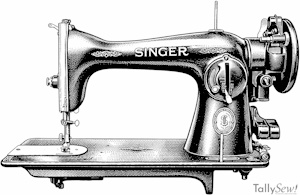
This article and reference tables are designed as a quick-lookup for matching Japanese JA and JC codes to factory manufacturers and export brand badges. For
More >>latest posts
Based on the classic Singer 201-2, the Singer 1200-1 was designed specifically for dressmakers and tailors. Explore the history and unique features of this standout machine, including its factory knee lift and powered artisan table setup.
More >>Introduced in 1910, the Singer Model 20 Sewhandy series proved that small, toy-sized sewing machines could still be fully functional. Explore the history, naming evolution, and mechanics of these cast-iron and aluminum single-thread chain-stitch machines.
More >>A Note on Controller CompatibilityWhile this article specifically highlights the classic Singer Bakelite button foot controller, this issue isn’t limited to a single model. Many
More >>Scope: This guide applies to the Singer 3-post power cord plug found on many North American models, including the 15-91, 201-2, and 221 Featherweight. Note:
More >>The integrated lamp on the Singer 201-2 is one of those small details that makes a big difference in everyday use. When working properly, it
More >>The Singer 201-2 is considered by many to be the best straight-stitch sewing machines ever made. Built from the mid-1930s through the late 1950s, it
More >>Sold by Morse of New York, the Model 600 was built in Obu, Japan by Toyota Steel Works. Finished in teal enamel it’s a pretty
More >>The Kenmore 1664 serger or model 385.1664190 was manufactured in Taiwan for Sears by the Janome sewing machine company. I don’t quite know when the
More >>The Kenmore 1914 was manufactured from 1975 to 1977 in Japan by the Jaguar/Maruzen companies for Sears and sold under their Kenmore brand. The model
More >>