Singer Model 20-1 and 20-10 Sewhandy
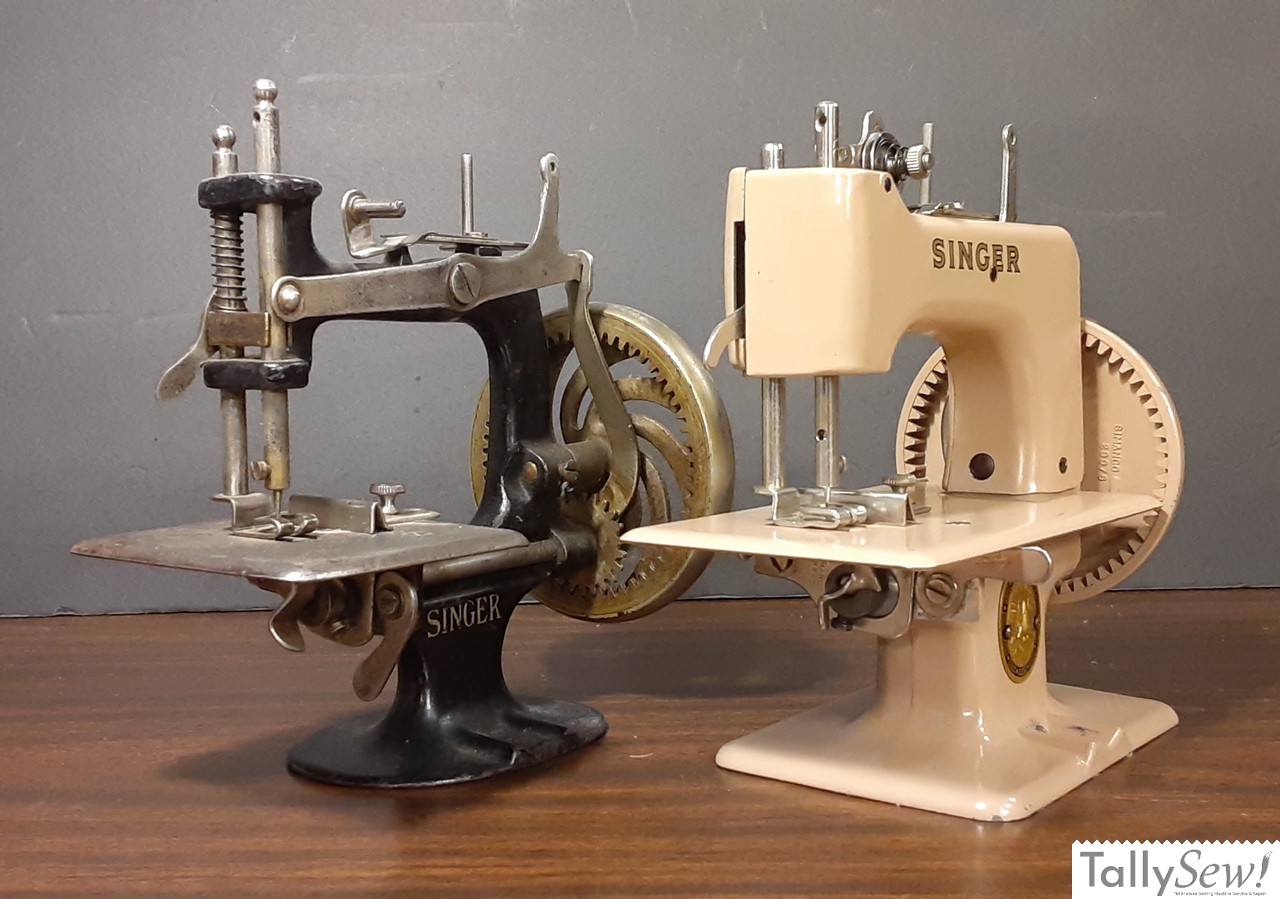
Introduced in 1910, the original Singer Model 20/Class 20 family remained in production in evolving forms through roughly the end of the 1950s. The series included small, toy-sized machines that were also fully functional single-thread chain-stitch sewing machines. Singer continued the Sewhandy concept into the early 1960s with later models such as the 40K and electric 50D, and reproductions of the earlier Model 20 appeared as late as the 1990s.
The Model 20 produces a chain stitch similar to that of the slightly larger Singer Model 24 and features adjustable stitch length and thread tension. Often marketed as a child’s first sewing machine, Singer promoted it heavily for making doll clothes, and some later Sewhandy sets were sold with doll-related sewing kits. This article focuses primarily on the original Model 20 machines, with the later reproductions covered only in passing.
Naming Conventions:
Singer originally marketed the machine to consumers simply as the Model 20 or No. 20, but Singer’s technical and parts literature later distinguished the hand-operated machine as 20-1 and the motorized version as 20-2. These were official Singer designations, not collector inventions. That also explains why early advertising can say simply Model 20 while Singer’s technical literature later says 20-1.
The “Sewhandy” name originated with compact sewing machines associated with the Frederick Osann Company and Standard Sewing Machine Company in the late 1920s. The trademark history between the two companies was legally complicated, but “Sewhandy” was formally registered in 1930, and Singer acquired rights to the name before later marketing its toy sized Model 20 under the Sewhandy name. Surviving legal records indicate that Singer began marketing the Model 20 as a Singer Sewhandy around 1950, coinciding with the postwar aluminum-bodied Model 20-10 era.
Singer 20-1
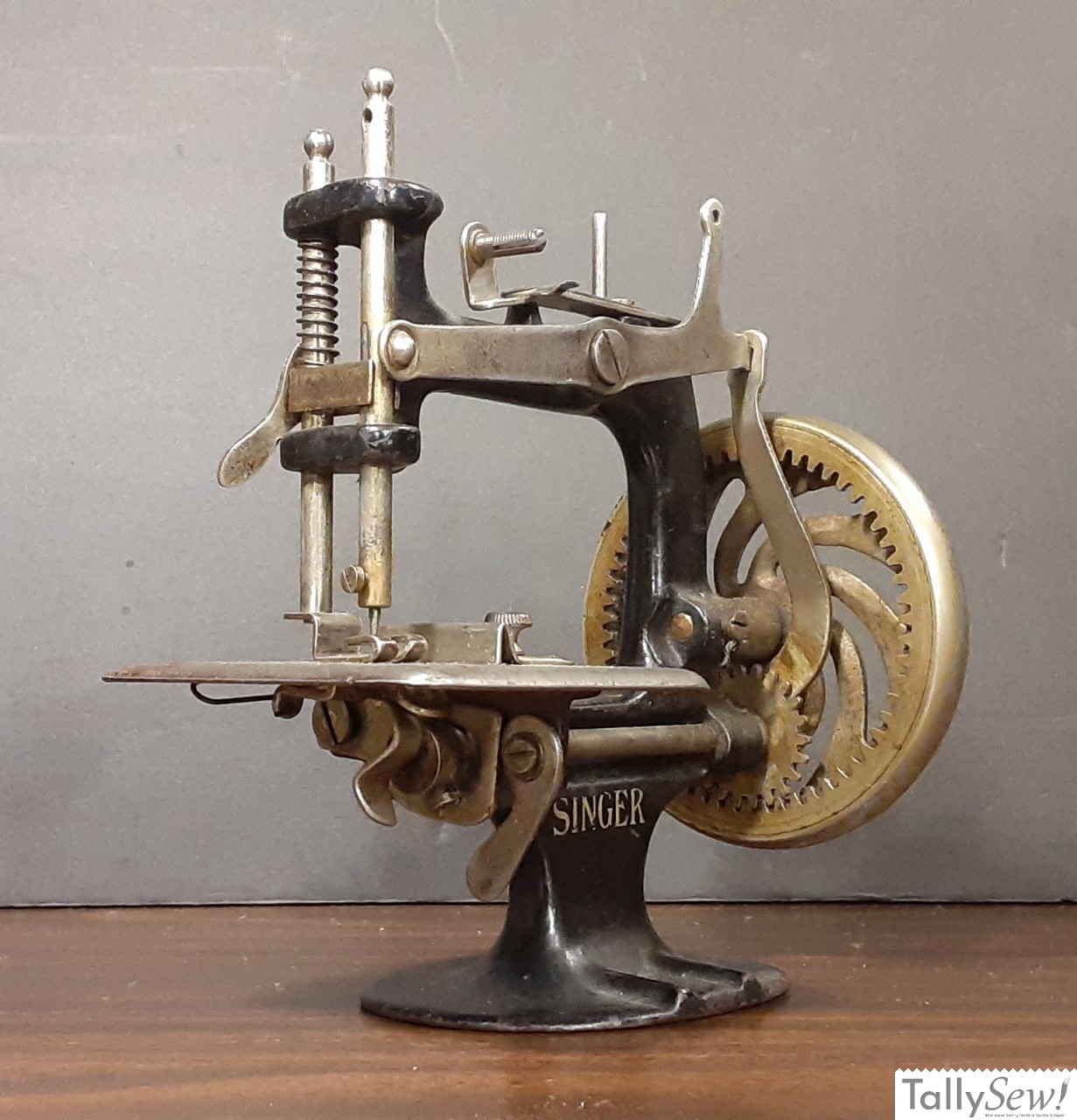
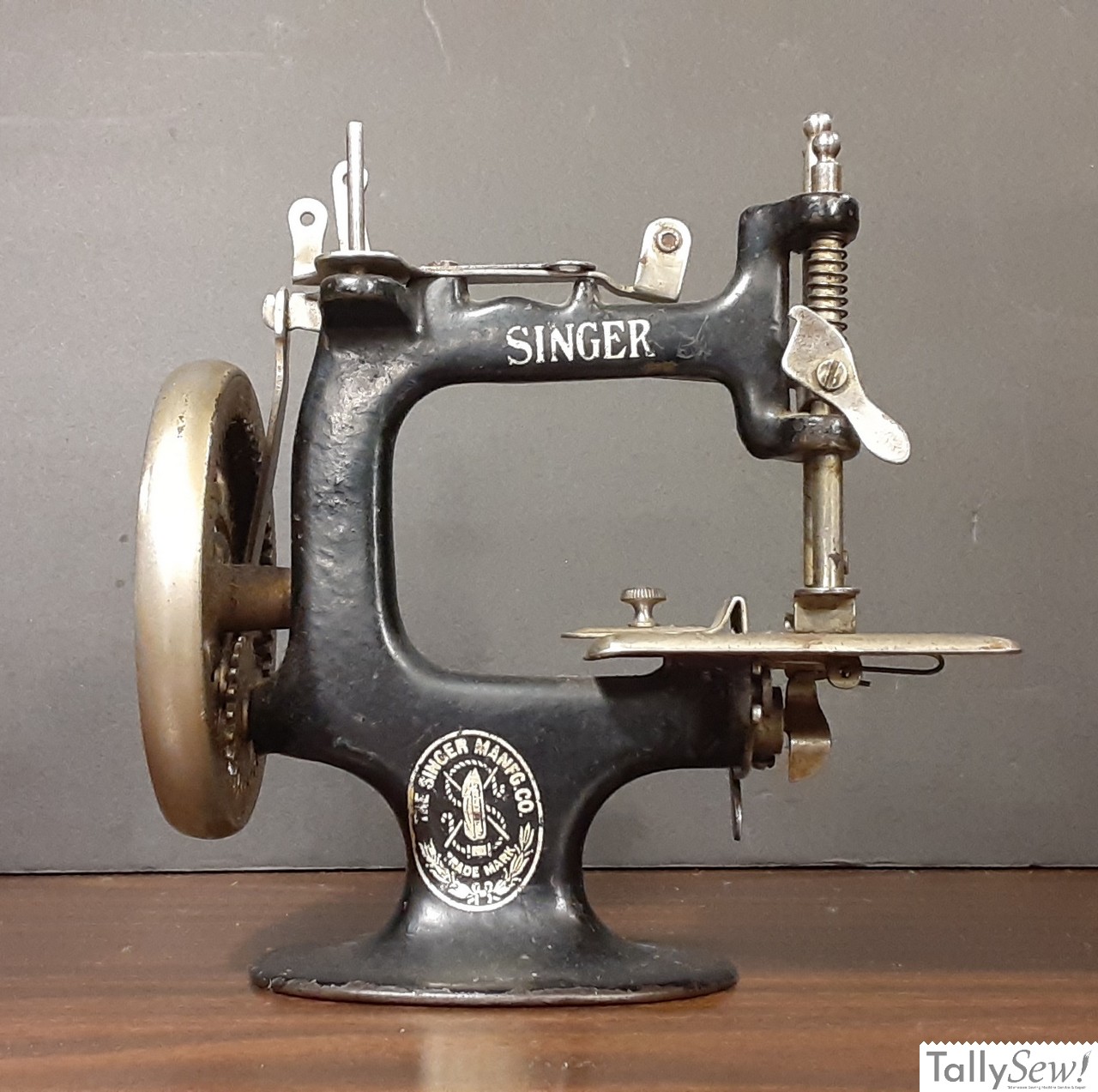
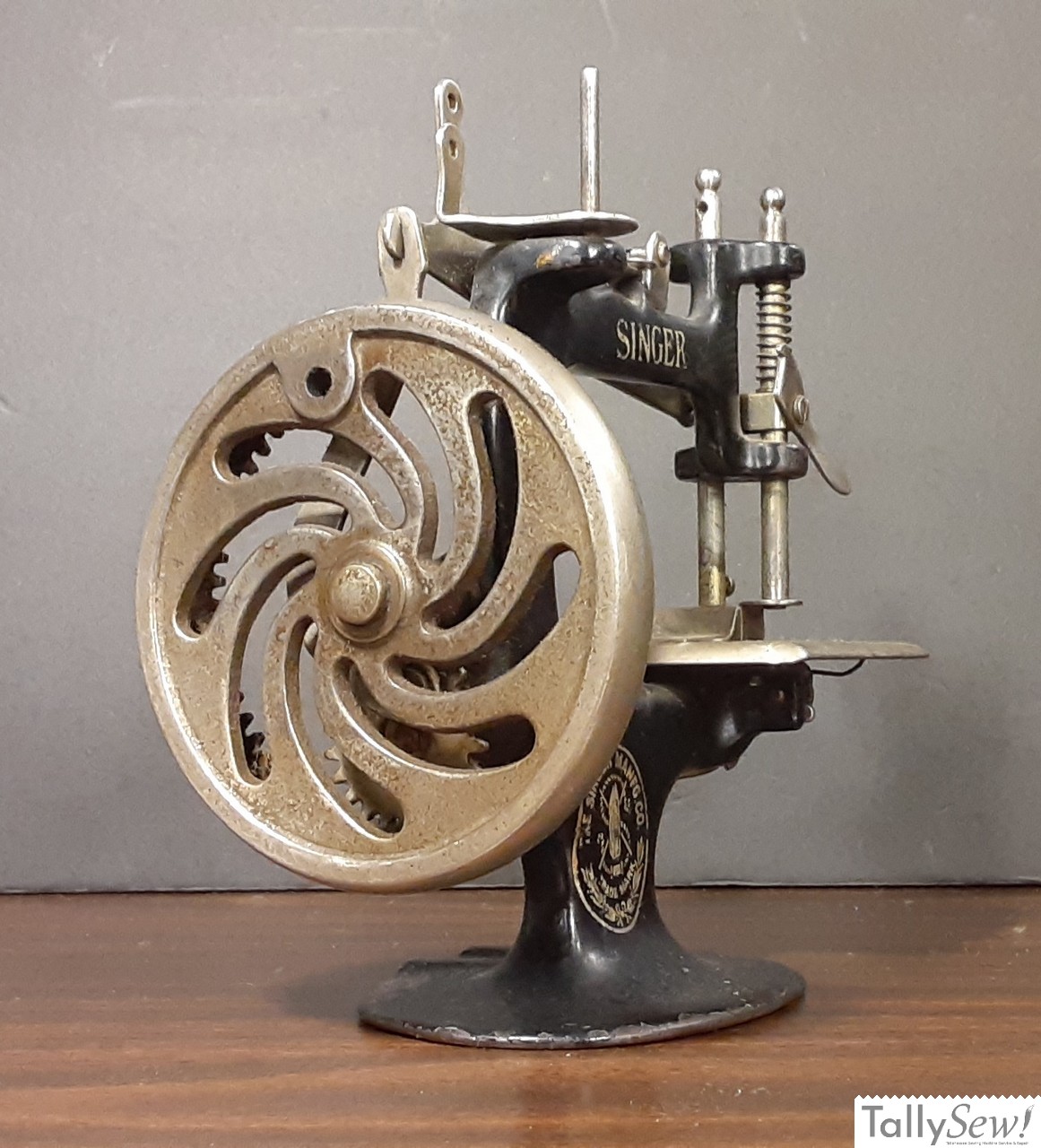
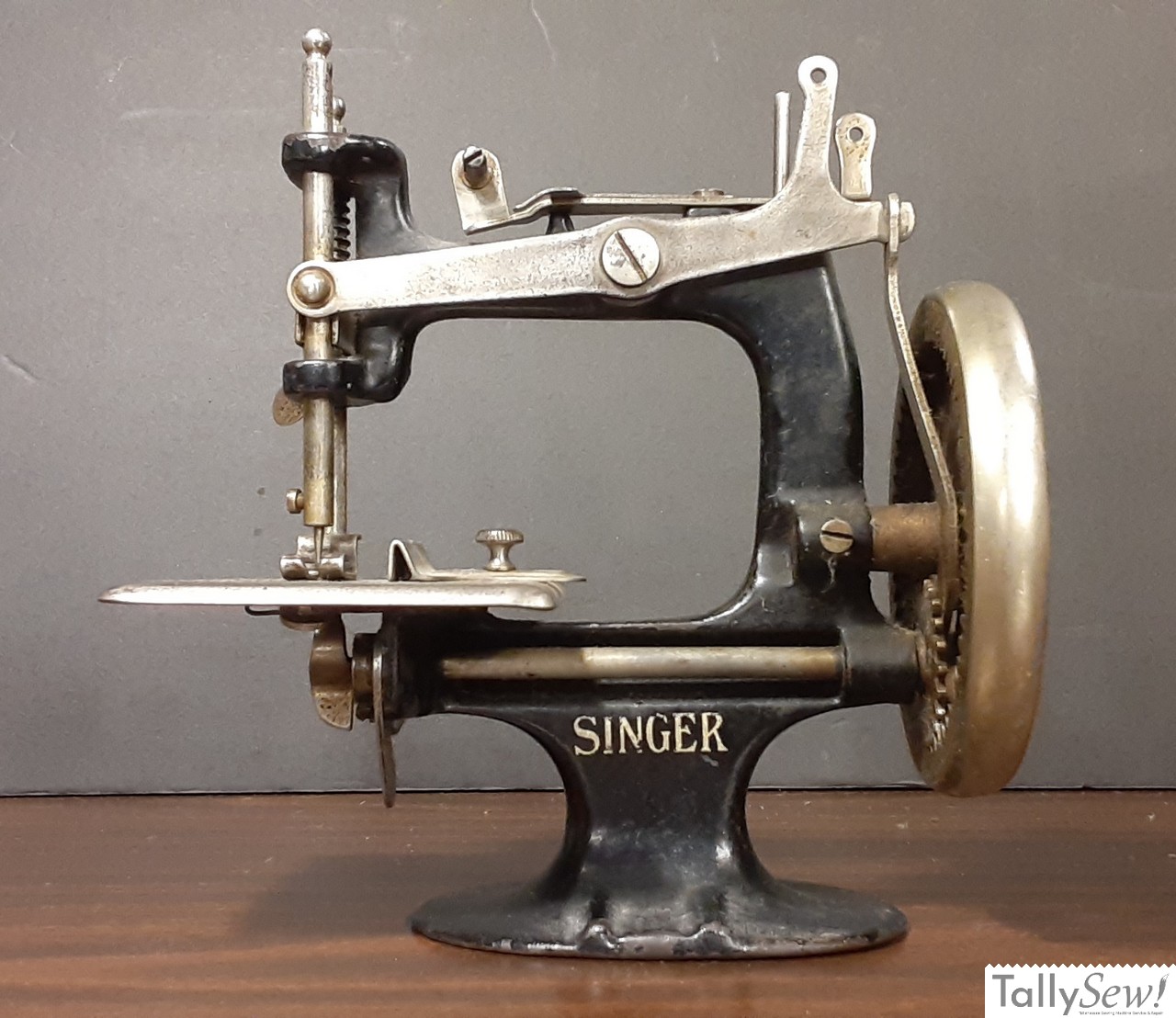
Above is my Singer Sewhandy 20-1. It’s missing a few parts (tension discs, thumb nut, tension spring and driving handle), so I’m working on making it whole again. I picked it up a few years ago at a local thrift shop and, due to its missing parts, I got it at a reasonable price.
Since my machine has an eight-spoke handwheel and tension discs (missing), it can be roughly dated 1914 to 1922.
Singer 20-1 (Early Cast-Iron Era)
The early Model 20 machines feature an open-frame cast-iron body with a Black Japan finish. Because Singer did not serial-number these machines in the usual manner, the following dates are approximate, collector-established ranges based on physical changes and surviving documentation:
- 1910–1914: 4-spoke “X-wheel” handwheel, without integrated tension discs.
- 1914–1922*: 8-spoke handwheel, with tension discs added. My example has a spiral-pattern nickel-plated handwheel.
- 1921–1926*: 7-spoke handwheel.
- 1926–1948: 7-spoke handwheel with numbered thread guides.
* Ranges overlap because some design changes were transitional rather than tied to documented model-year cutoffs.
Singer Sewhandy 20-10
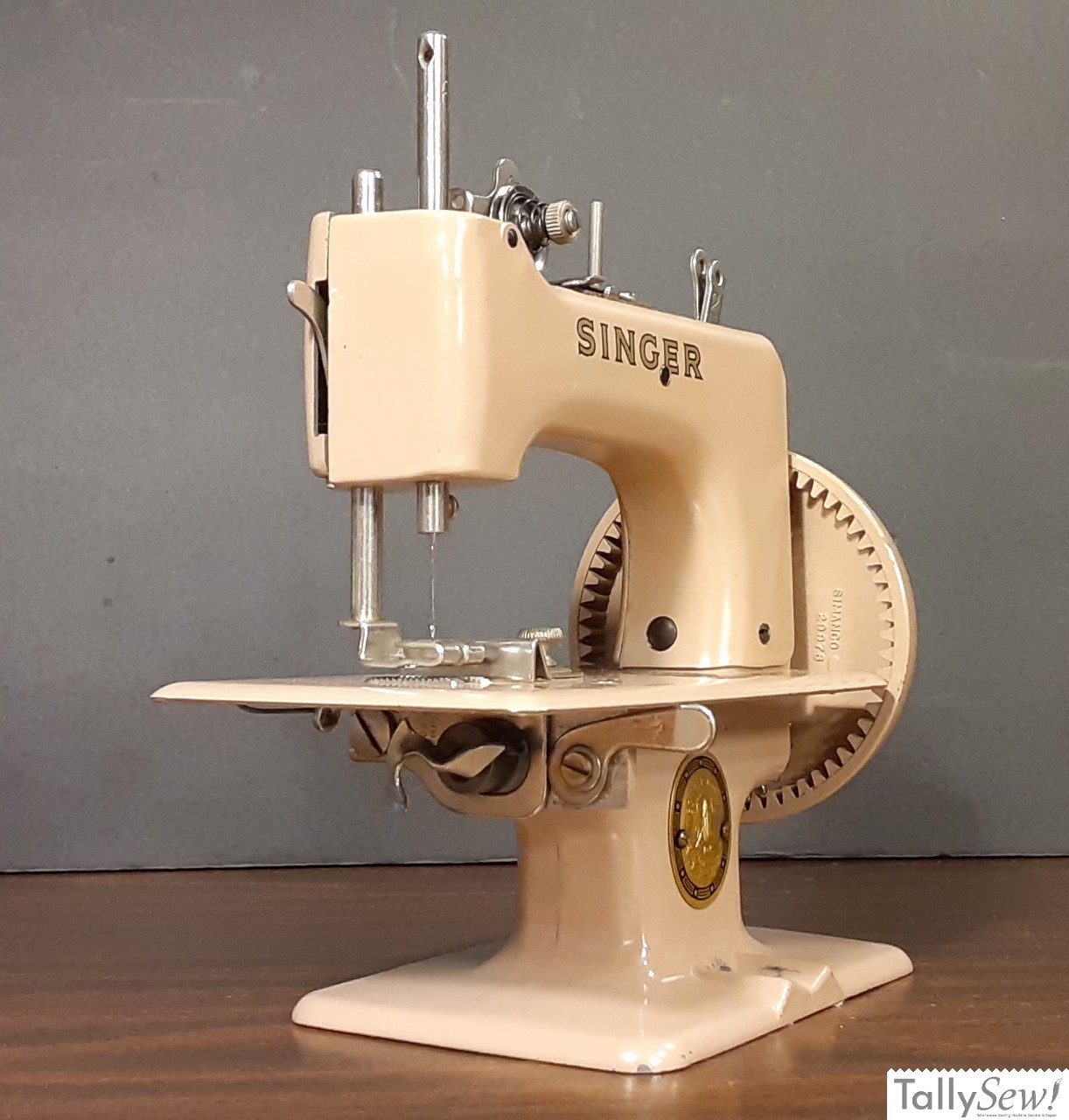
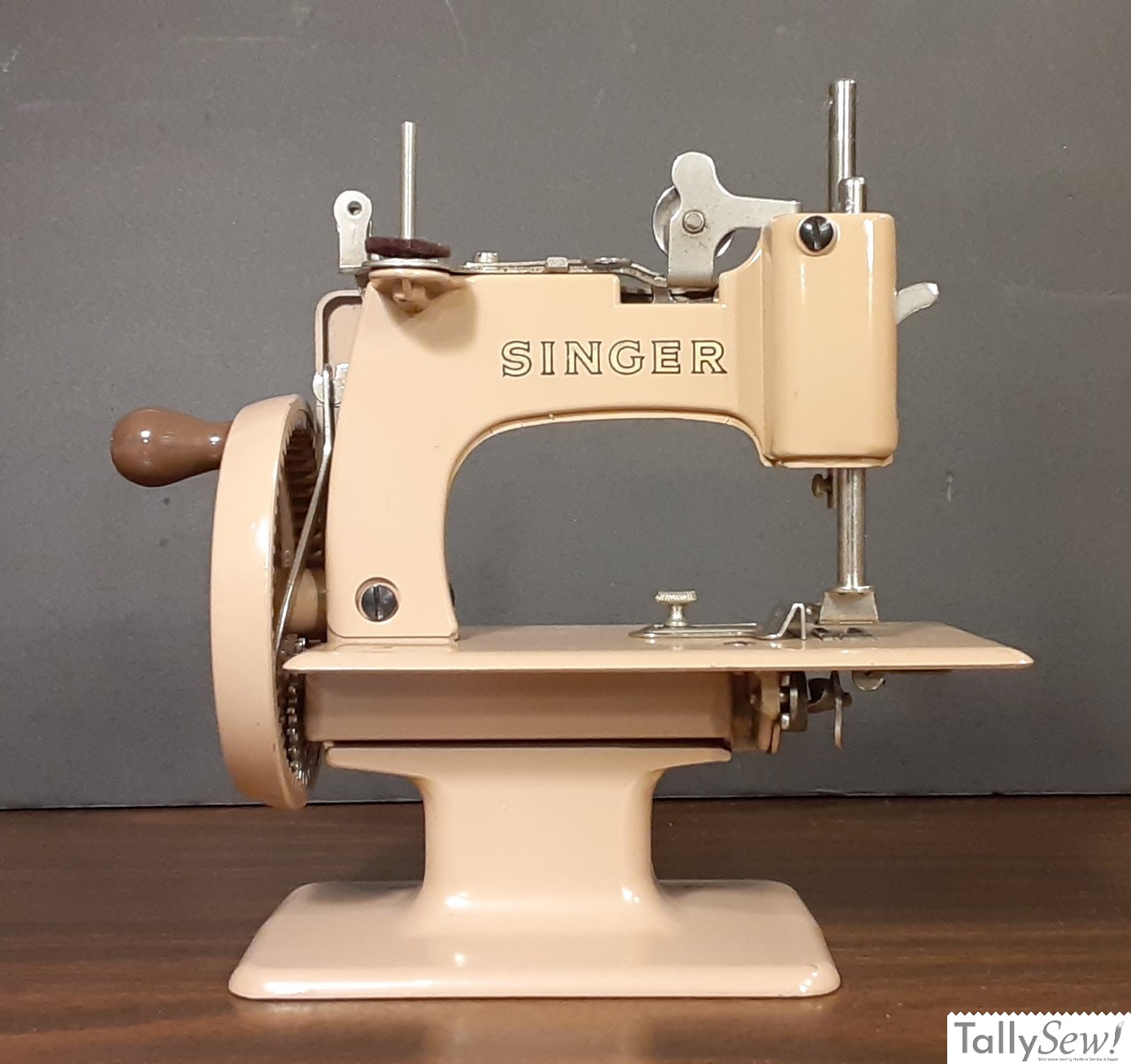
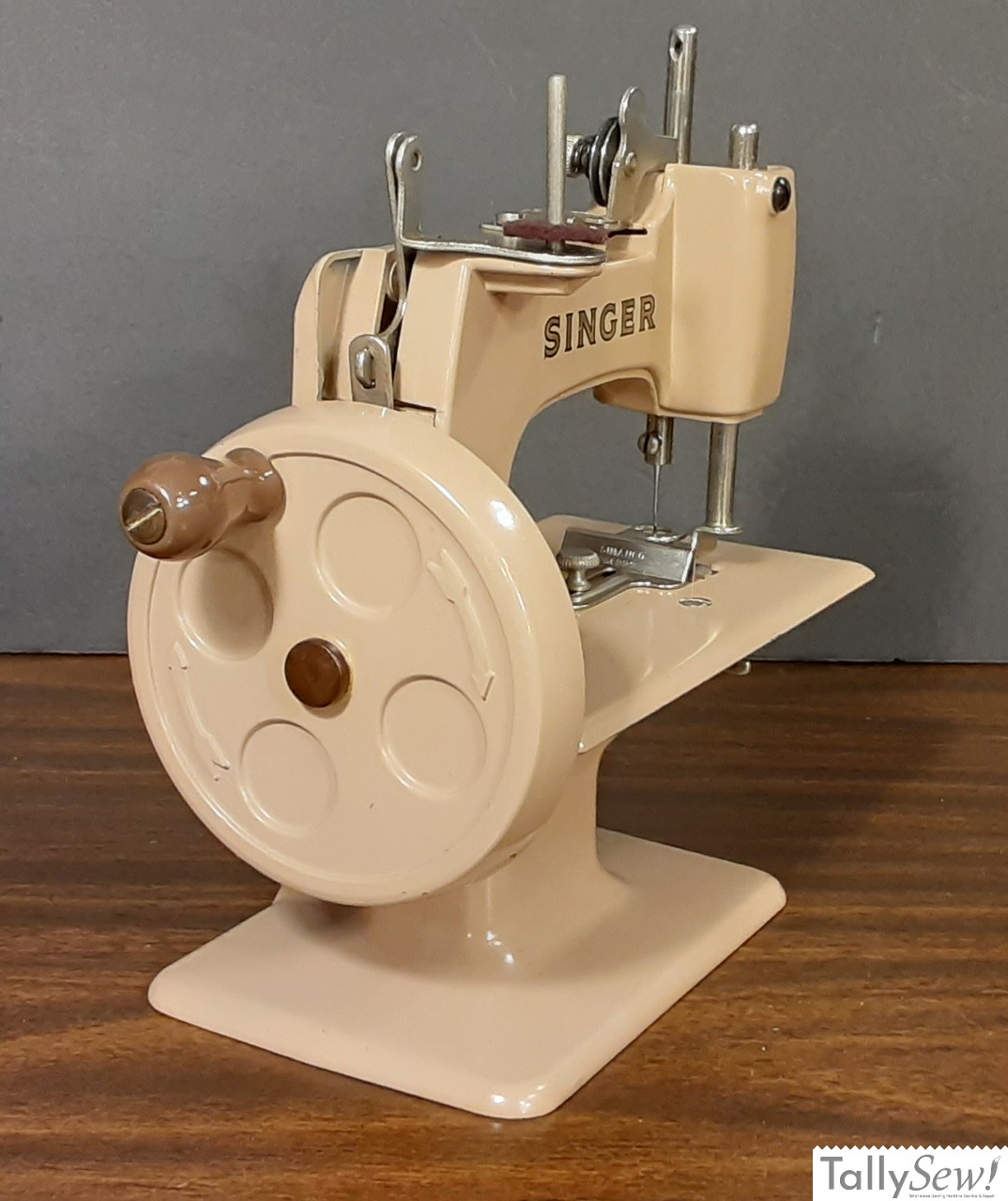
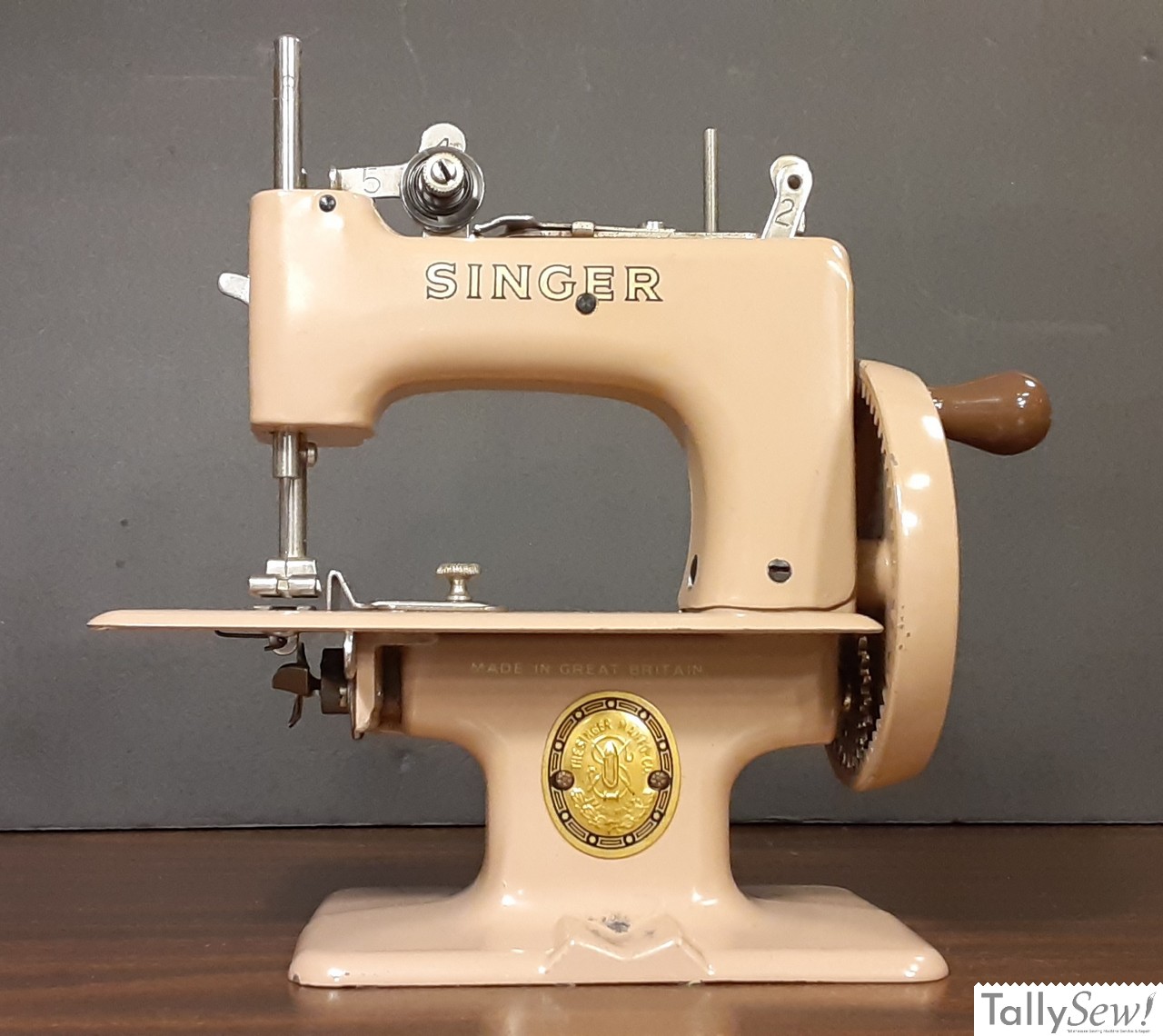
Around 1948, Singer introduced the updated Sewhandy 20-10 with a die-cast aluminum body, larger work surface, and substantial rectangular base with rounded corners. It came in tan (see above), black, and from what I read it was also offered in cream, red, and blue.
This Singer Sewhandy 20-10 is owned by a friend of mine who has had it since she was a kid. She was kind enough to lend it to me so that I could document it here for you.
Singer Sewhandy 20-10 (Post-War Redesign)
Collector research places introduction of the redesigned 20-10 at about 1948; Singer documentation confirms the model by 1950. It replaced the earlier open-frame cast-iron design with a cast-aluminum body including an arm side cover enclosing the internal moving parts, a wider work surface, and a sturdy rectangular base. During the 1950s, the 20-10 became the familiar post-war version of the Model 20.
- Color Variations: Surviving 20-10 machines appear in black, several beige/tan shades, blue, red, and less-common specialty finishes. Modern collector names for particular shades are not always Singer’s original color terminology.
- Electric Model(s): Early 20-2 machines were based on the cast-iron 20-1 design; later motorized examples used the enclosed 20-10-style body.
- International Production: Model 20 and Sewhandy machines were produced or assembled for several national markets. Surviving examples are marked Made in U.S.A. and Made in Canada, while British 20K versions are also documented. Distinctive French-market 20-10 machines are known, although factory-of-manufacture claims should be based on the markings on individual machines.
Sized like a toy, but not built like one
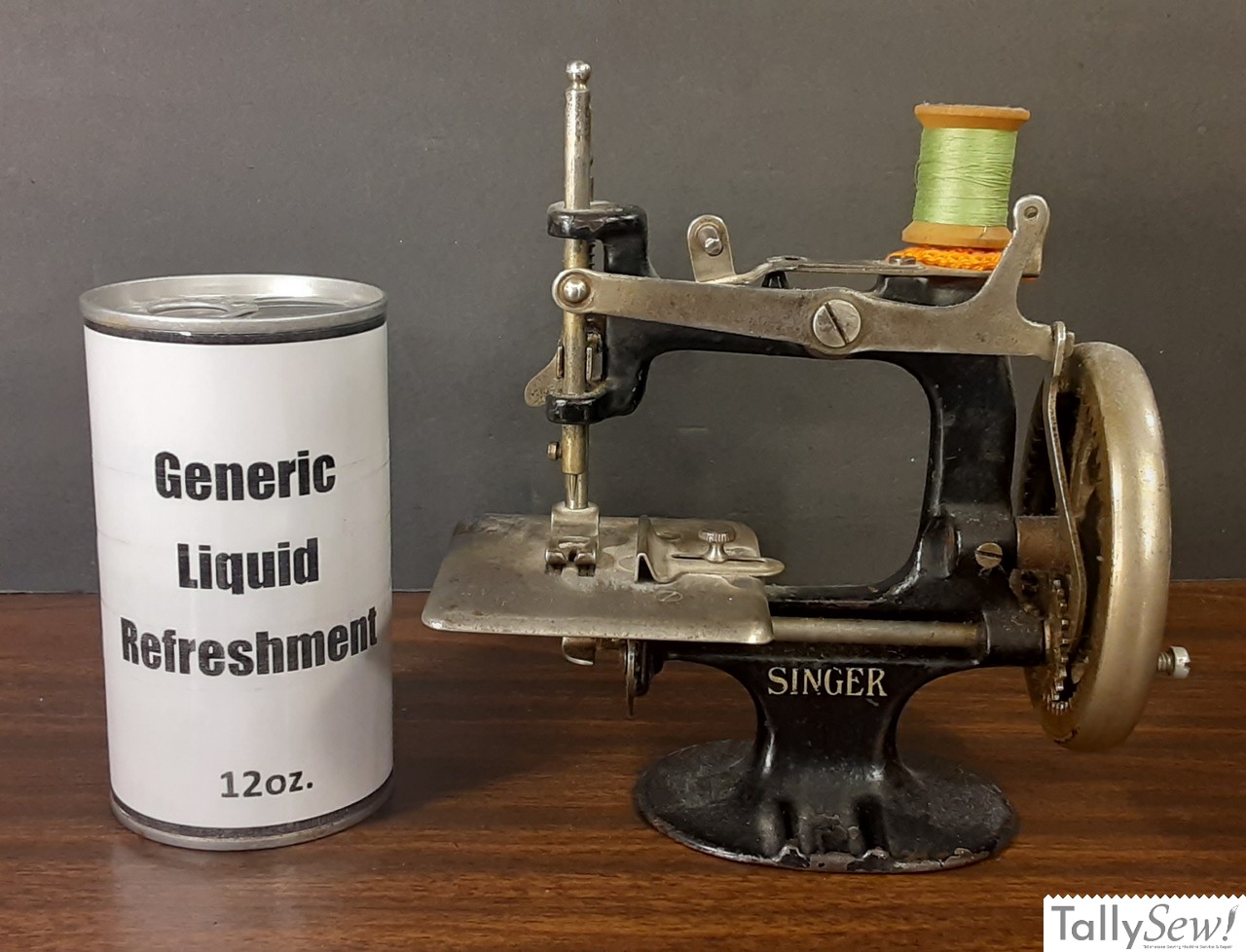
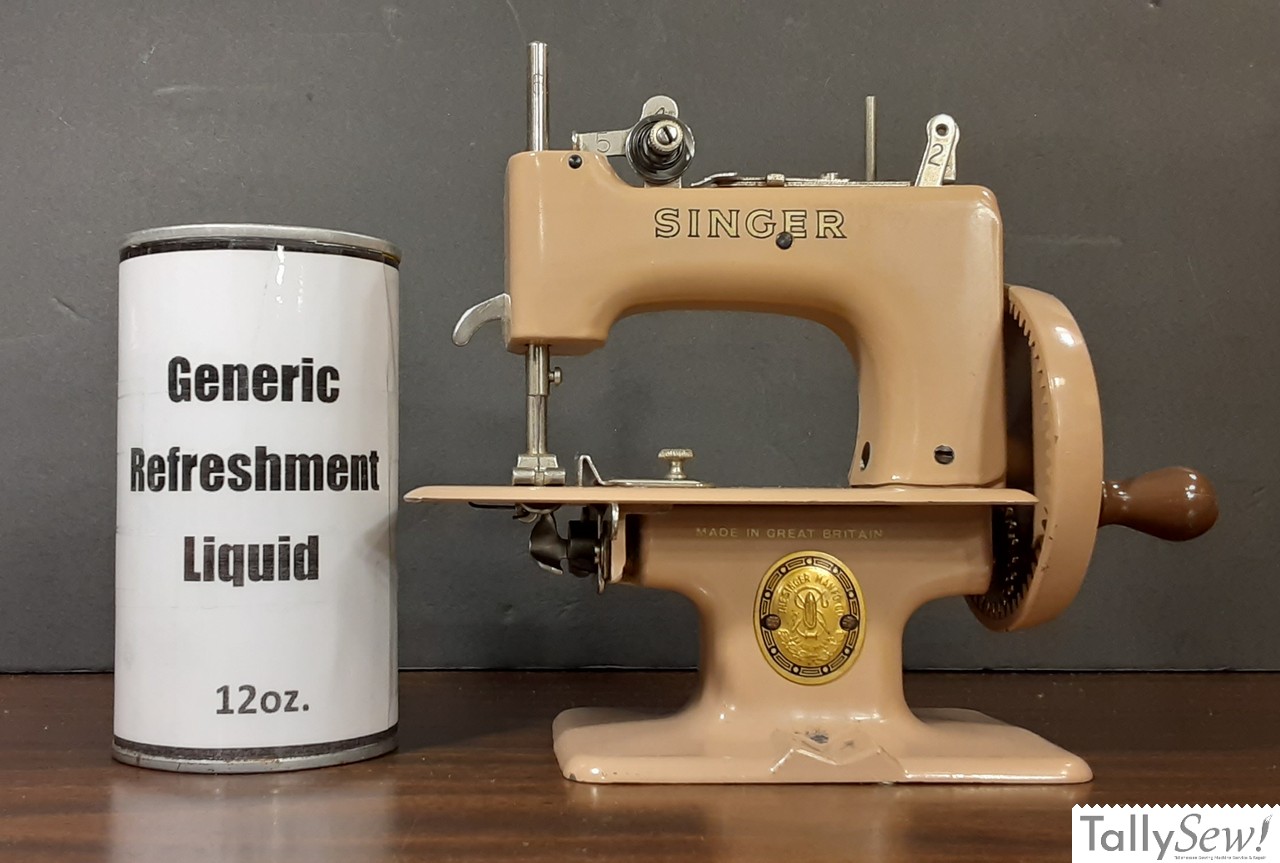
Other companies made toy sewing machines during this period. Some were functional machines like the Singer Model 20, while others were little more than toys or decorative objects. The Model 20 stood apart from many inexpensive children’s machines because it used substantial cast construction and a genuine feed, presser foot, tension system, needle and timed rotary looper mechanism. It was a functional sewing machine in miniature, not simply a toy made to resemble one.
The Model 20 was successful enough to inspire numerous competing machines and direct copies. Its cast-iron and later die-cast aluminum construction also helps explain why many surviving examples remain structurally sound today.
Sized Like a Toy, Built Like a Machine
| Component / Spec | Technical Detail |
| Stitch and Feed Mechanisms | Single-thread chain stitch formed by a rotary looper, which makes one full revolution per stitch. Stitch formation depends on the precise timing relationship between the rising needle and rotary looper. As the needle begins to rise from its lowest position, a loop forms behind it. The rotating looper point enters that loop and carries the needle thread through the preceding loop to form the chain stitch. A mechanical feed system advances the fabric between stitches. |
| Needle System | Singer Class and Variety 24×1; Singer originally listed sizes 9, 11, 14 and 16. Install with the flat side of the shank to the right and thread from left to right. |
| Recommended Thread | Smooth, good-quality cotton; Singer specifically recommended glazed cotton for improved sewing results. |
Singer marketed the Model 20 directly to girls. Period packaging called it “A Singer for the Girls” and emphasized that it was a real sewing machine rather than merely a toy. Its single-thread chain-stitch mechanism eliminated the need to wind, insert, and thread a bobbin, simplifying setup for a beginning sewer. The machine still required proper needle installation, threading, tension adjustment, and handwheel operation, making it a functional sewing machine in miniature. Because the chain stitch can be unraveled relatively easily by pulling the thread from the appropriate end, mistakes can be corrected without cutting the seam, which was useful when making doll clothes and other small projects.
Original 20-10 Sewhandy Accessories & Packaging
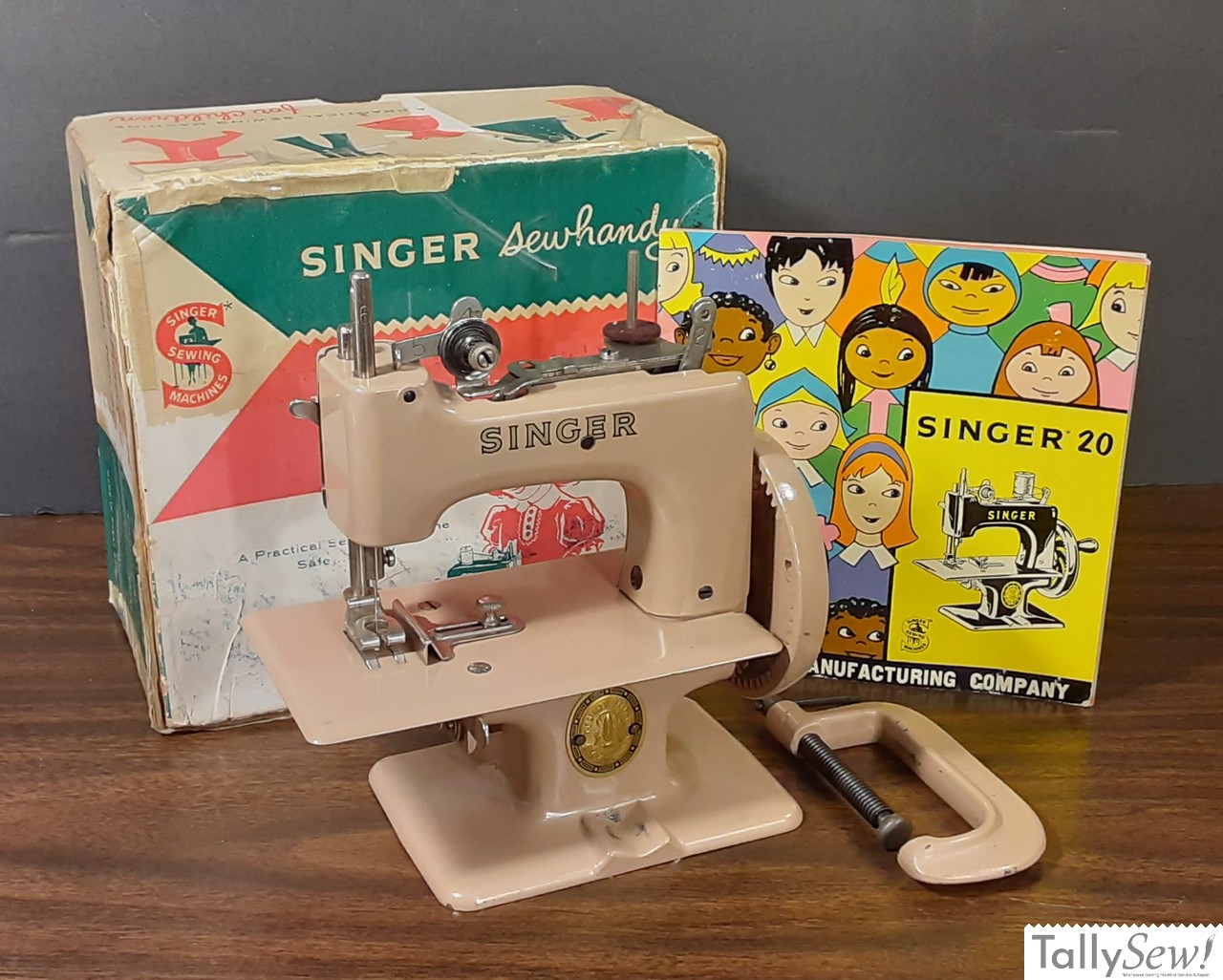
While earlier Model 20 machines were supplied in simple cardboard cartons with basic instruction sheets, the post-war Model 20-10 featured bright, kid-friendly packaging and dedicated accessories designed to make setting up and operating the machine easy for a beginner to understand.
The Original Retail Box
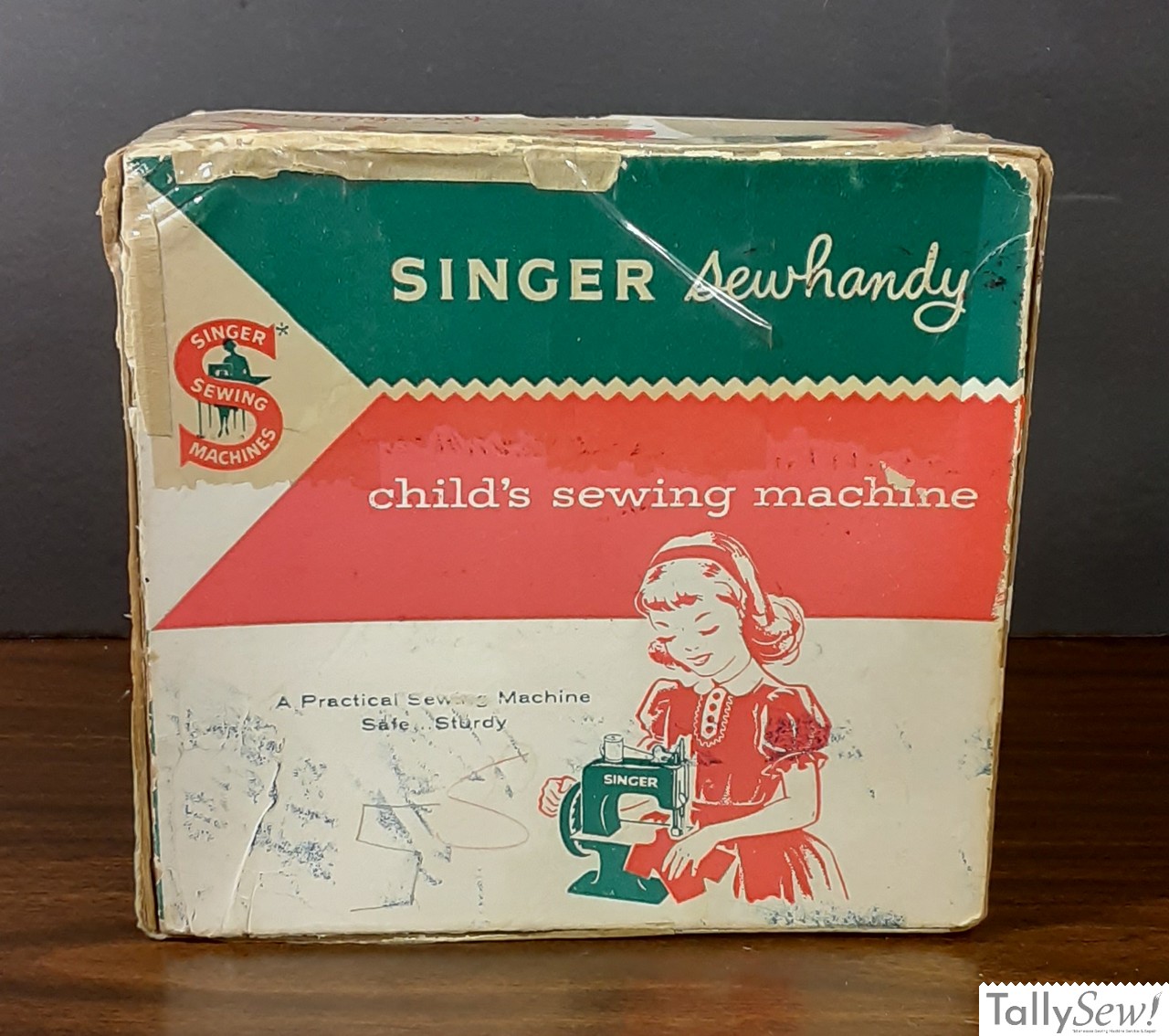
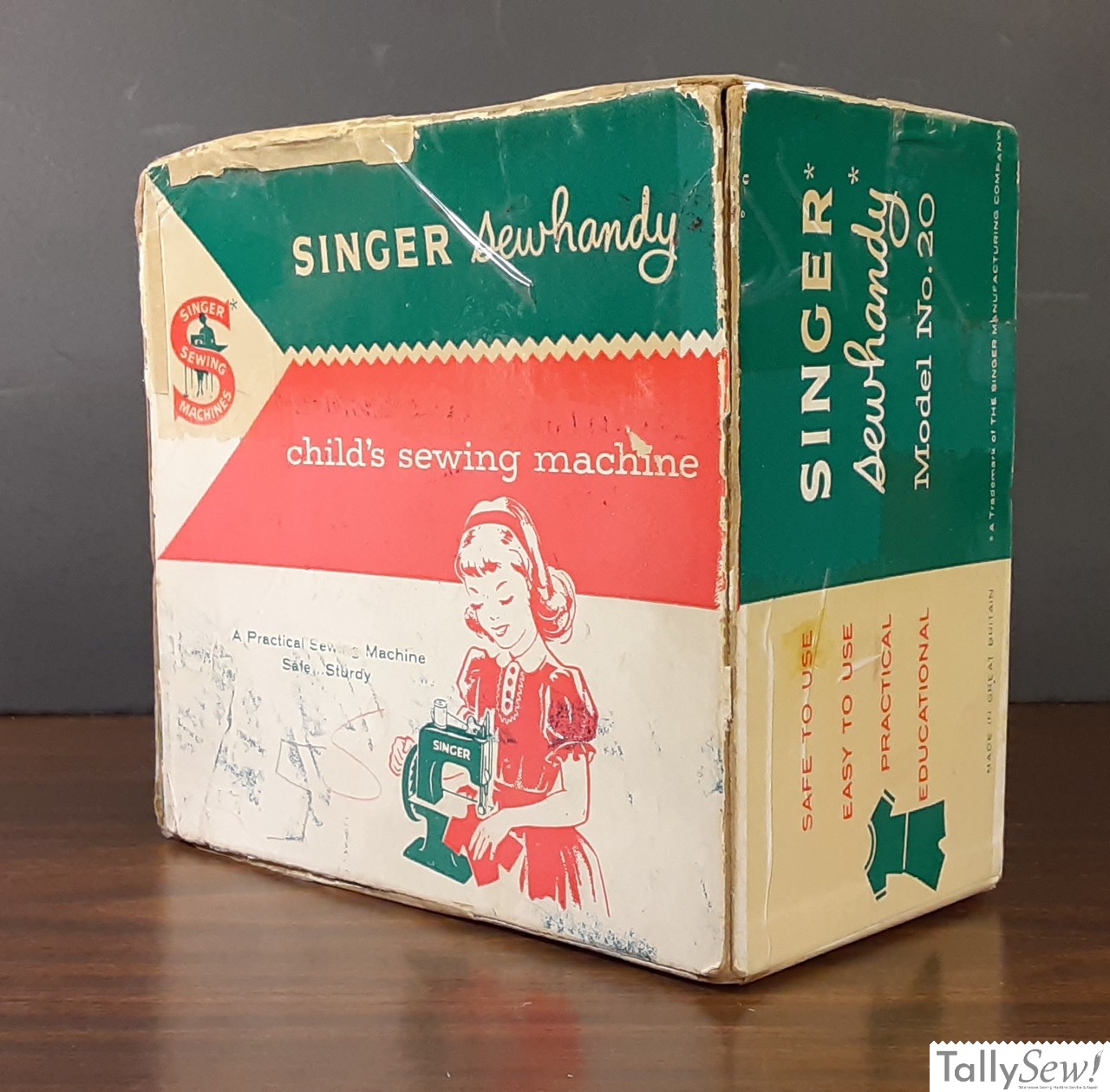
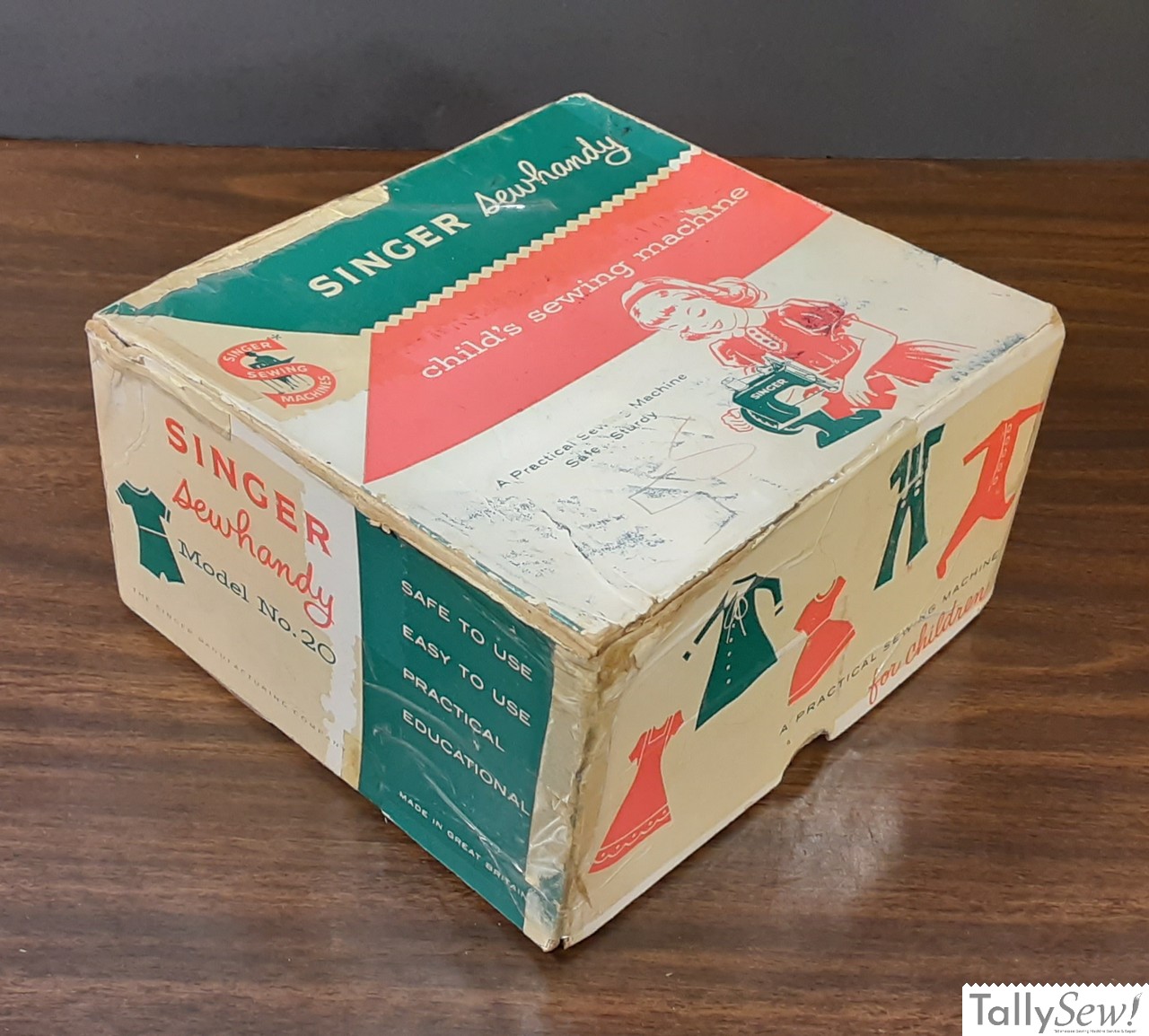
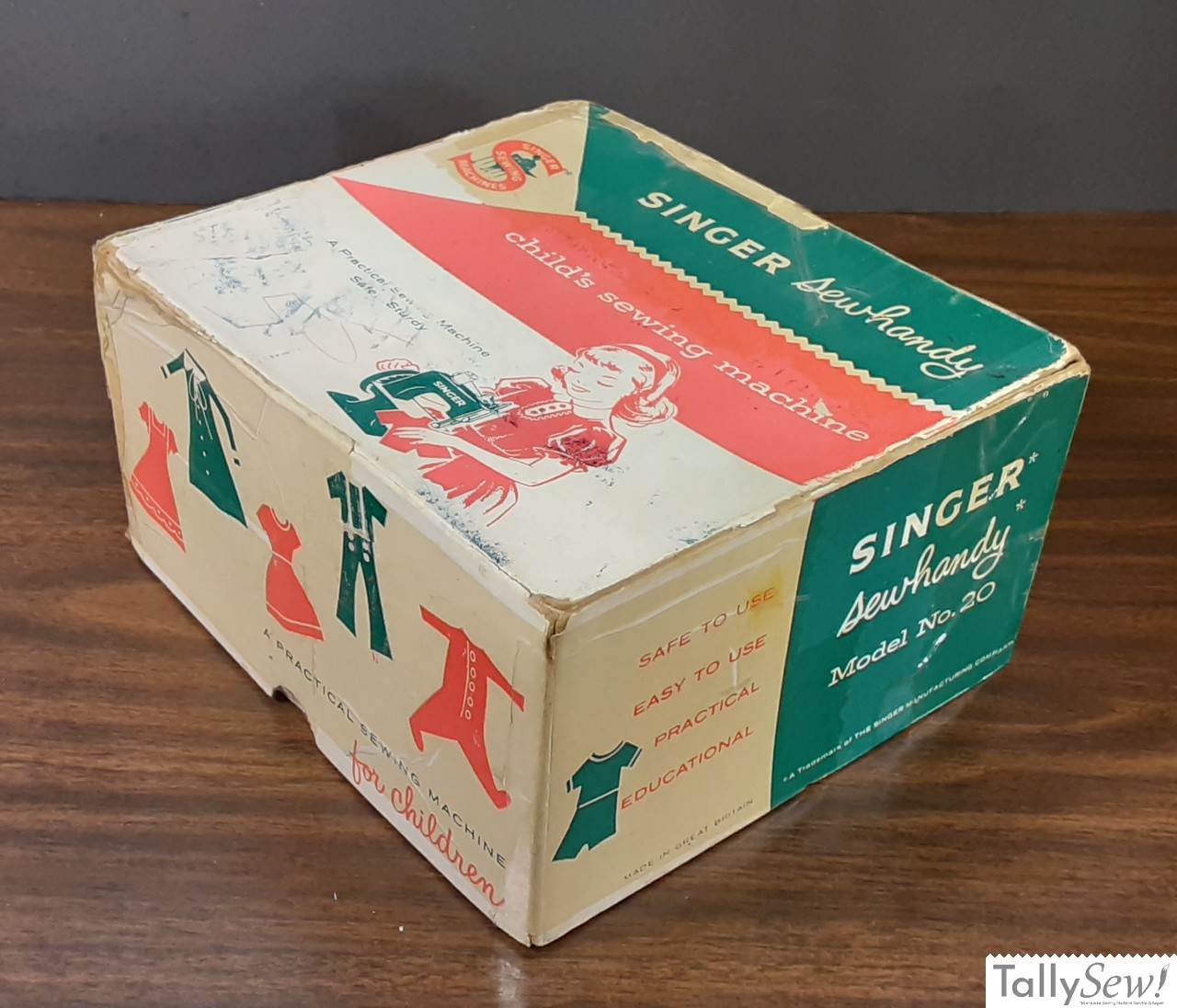
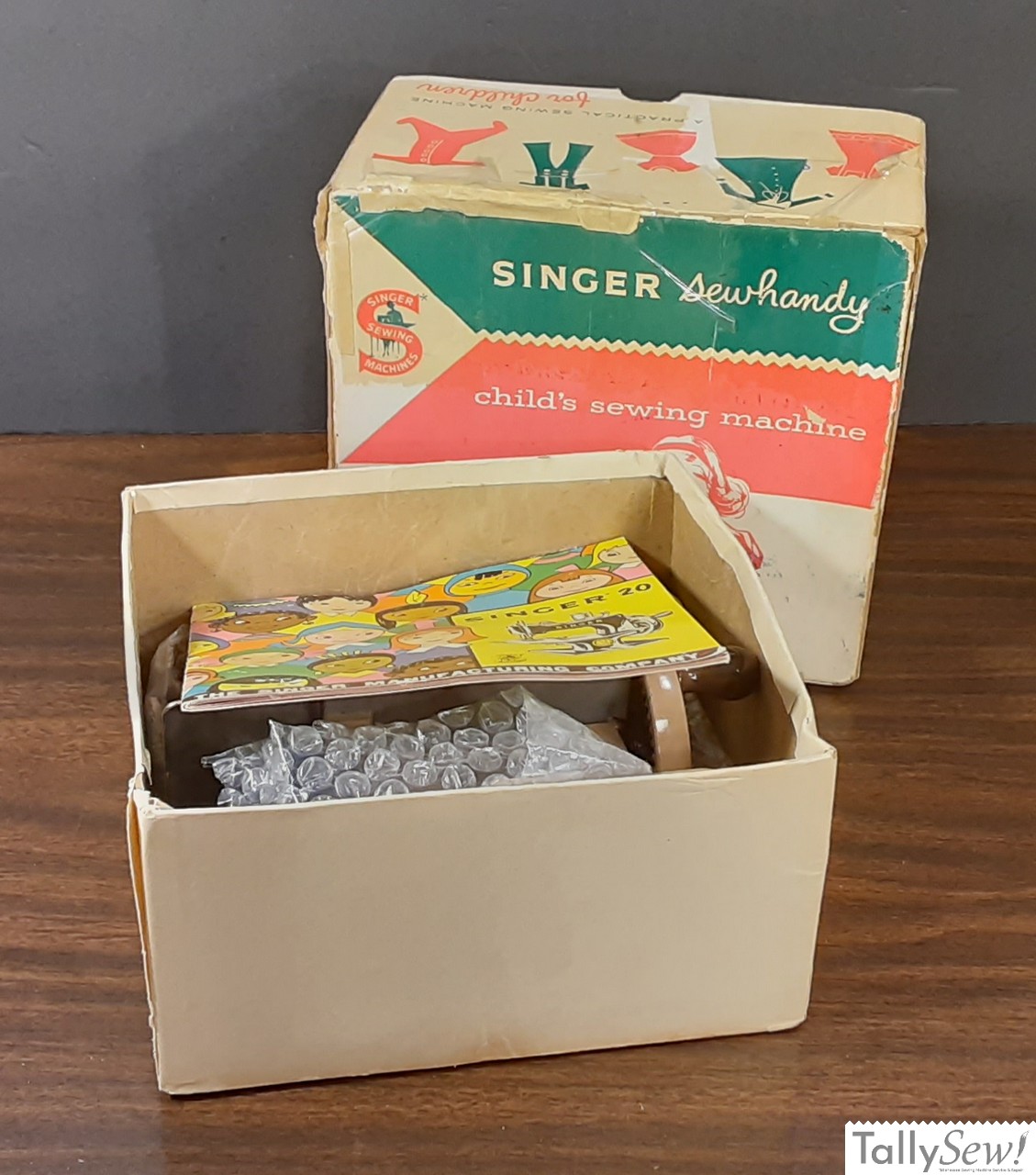
The 20-10 was packaged in a colorful, illustrated cardboard box designed for retail display. Featuring mid-century artwork, the box served as both a retail box and storage container, emphasizing that the Sewhandy was a genuine working machine tailored for young sewers.
The Table C-Clamp
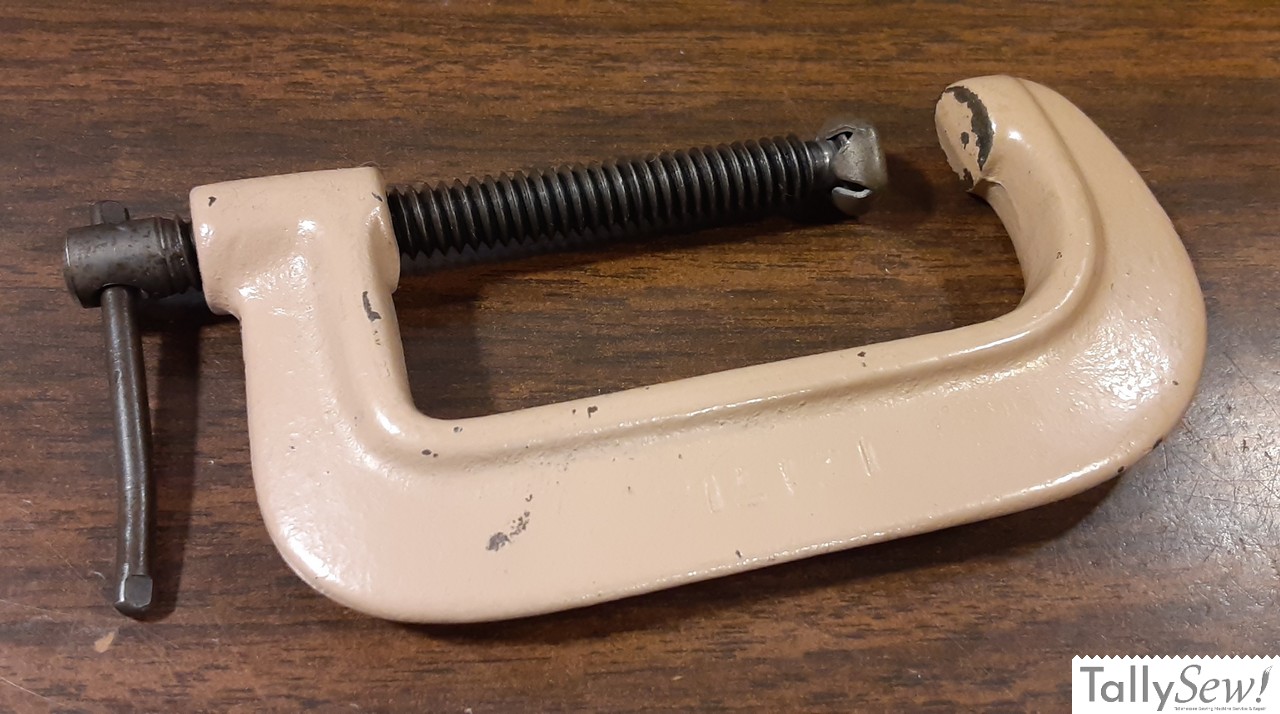
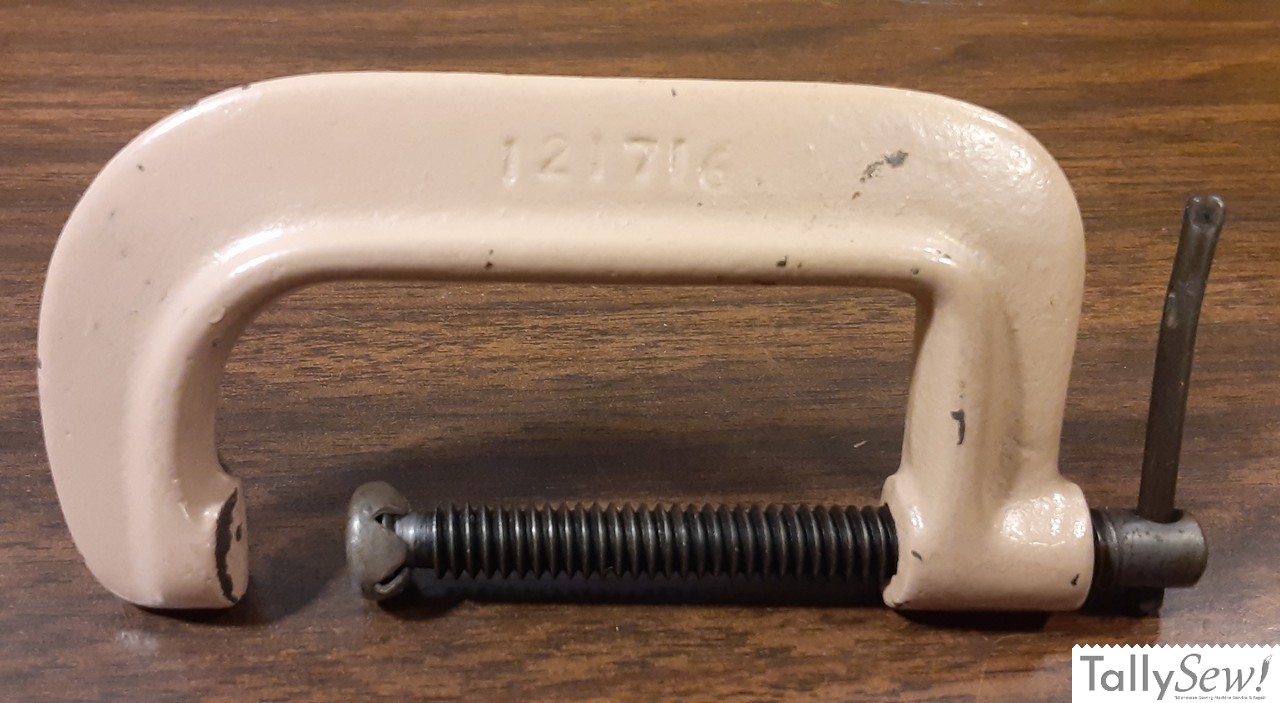
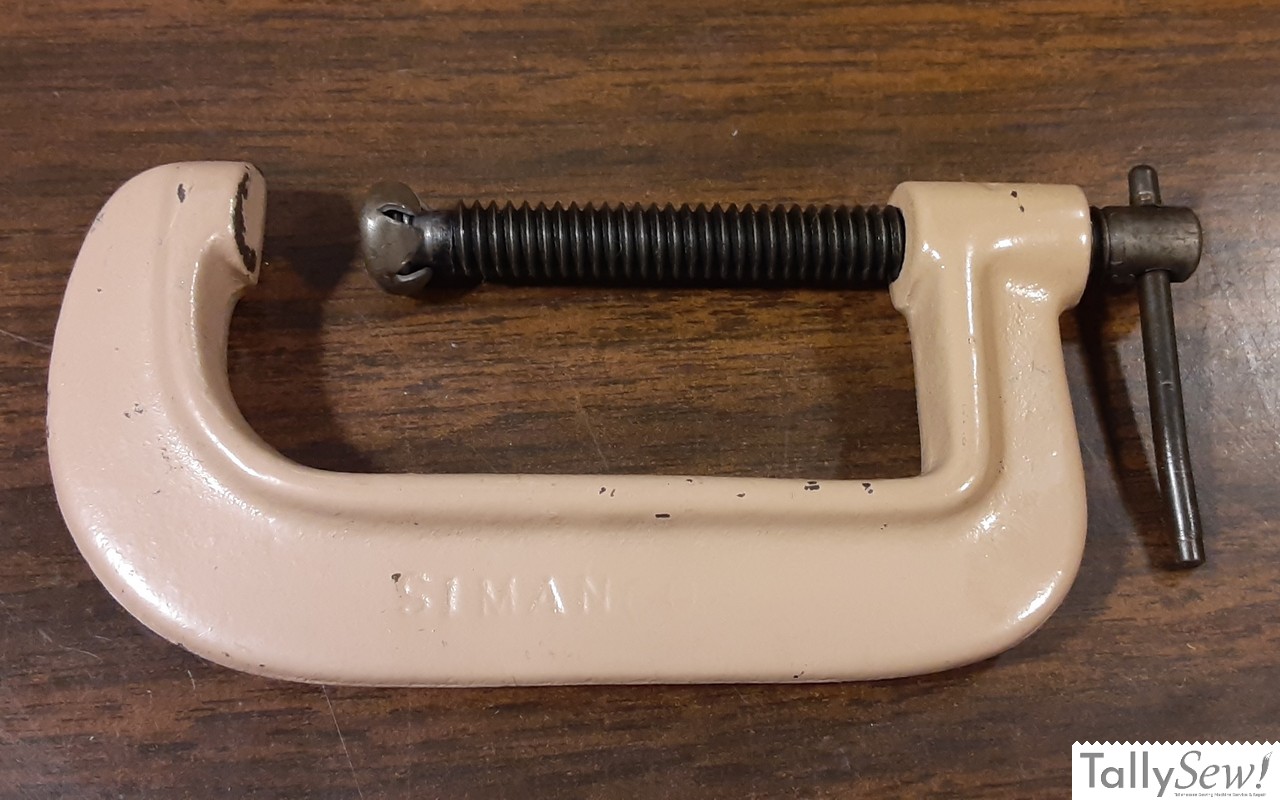
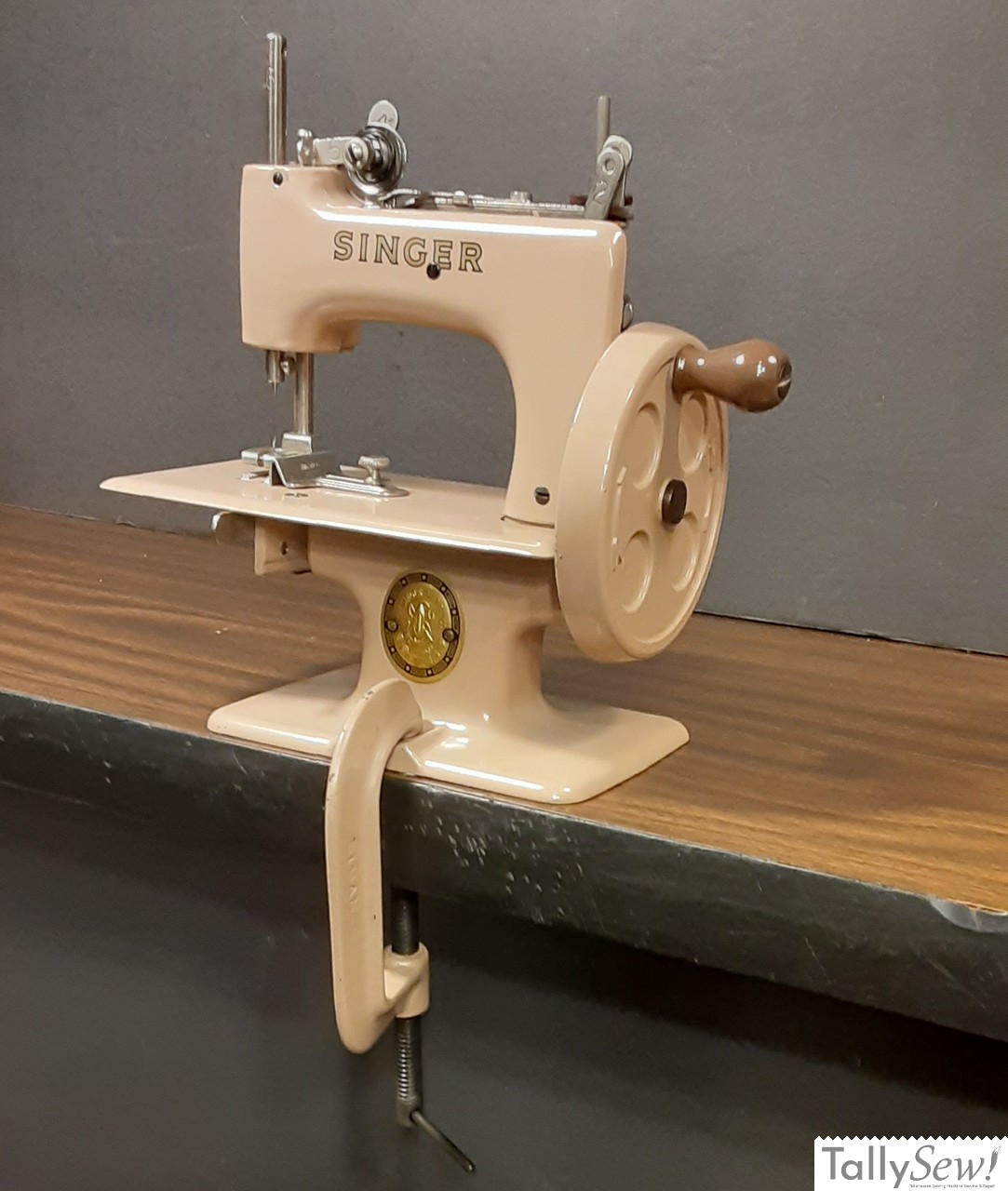
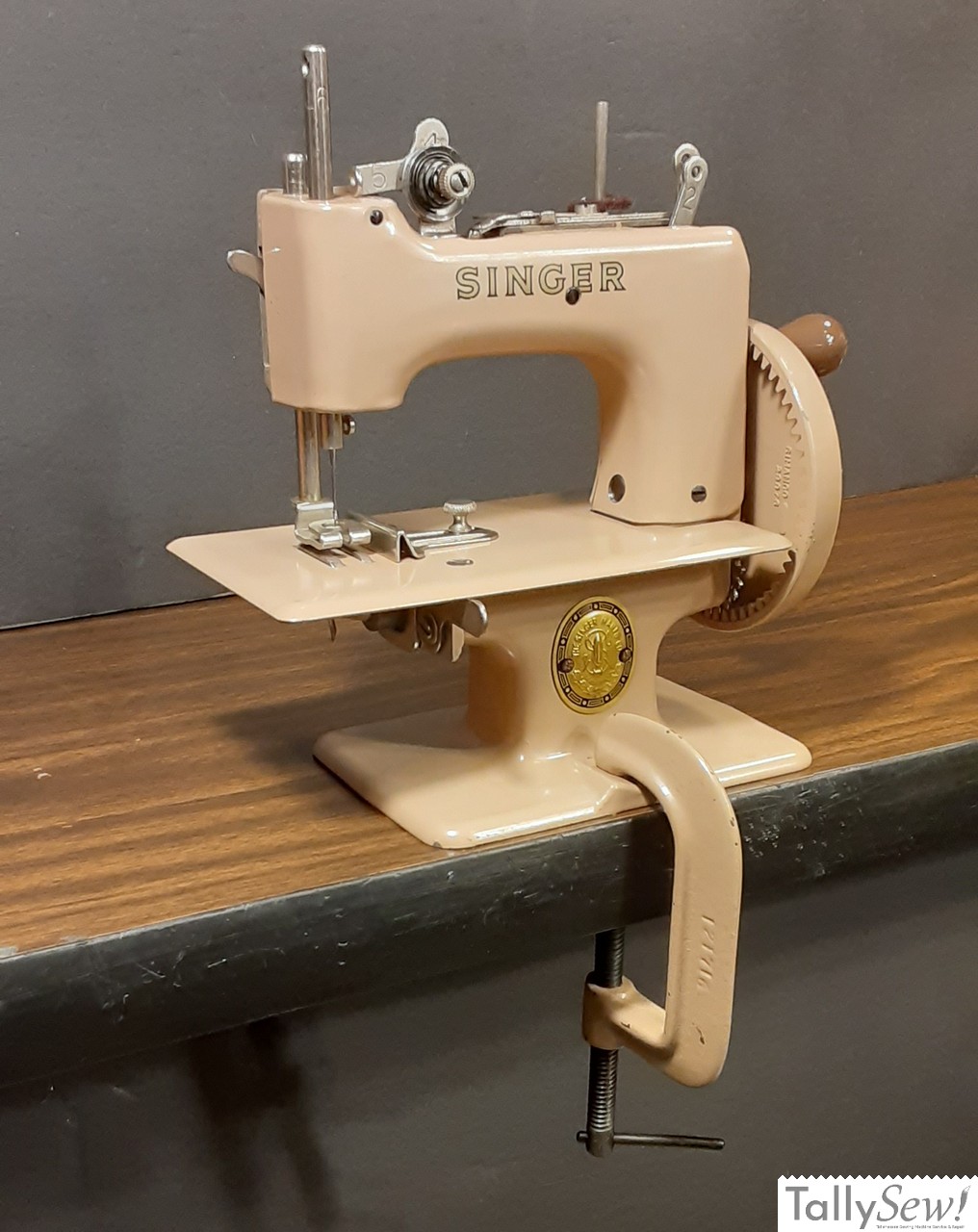
Because the machine would shift during hand-cranking, Singer supplied a metal table clamp with Model 20 machines to secure the machine during operation.
- Function: Slots directly into the notch on the rectangular base to anchor the machine firmly to the edge of a table or desk.
- Design: The screw terminates in a broad swivel pad that spreads the clamping load against the underside of the table.
The “Comic Book” Instruction Manual
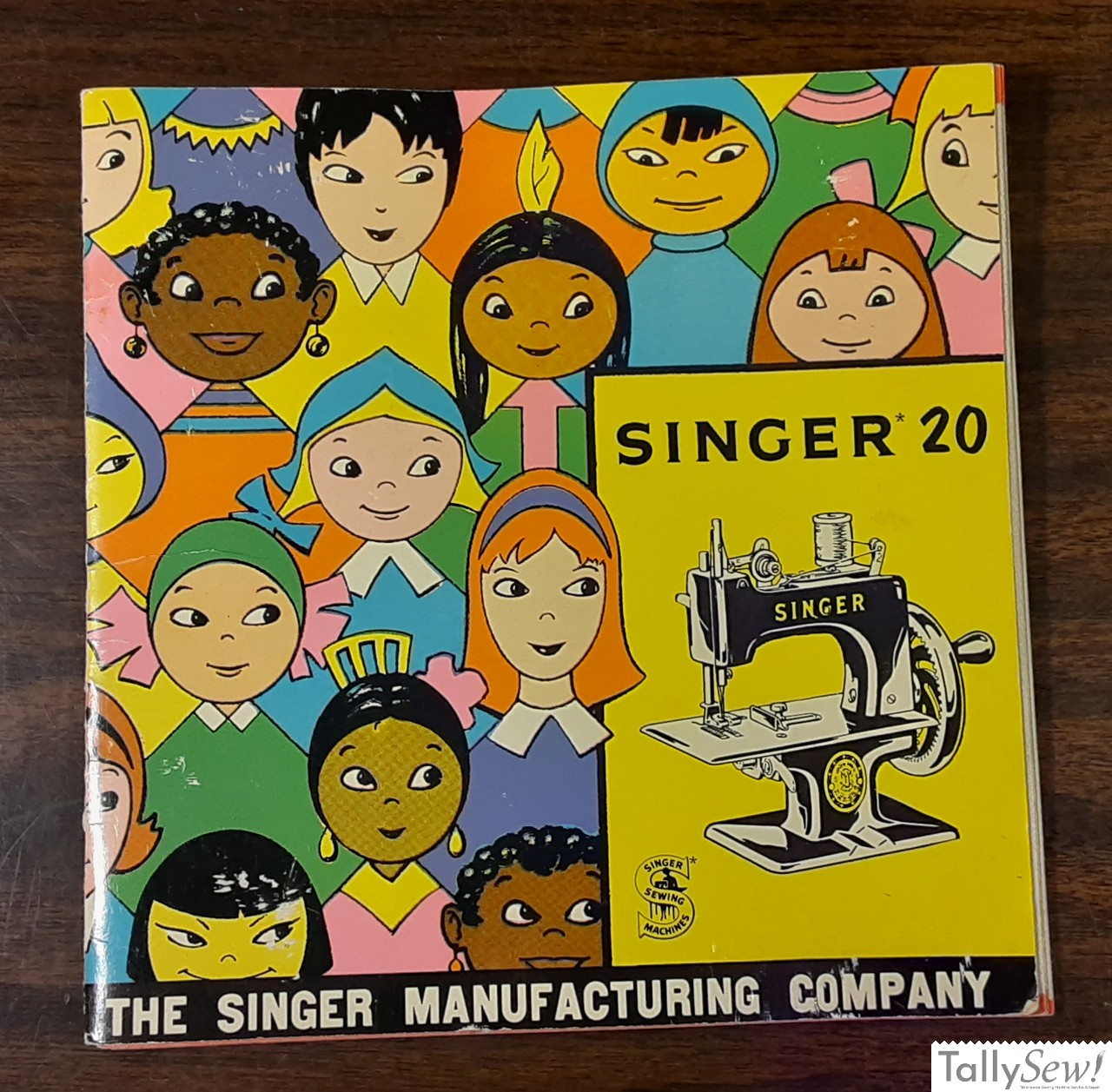
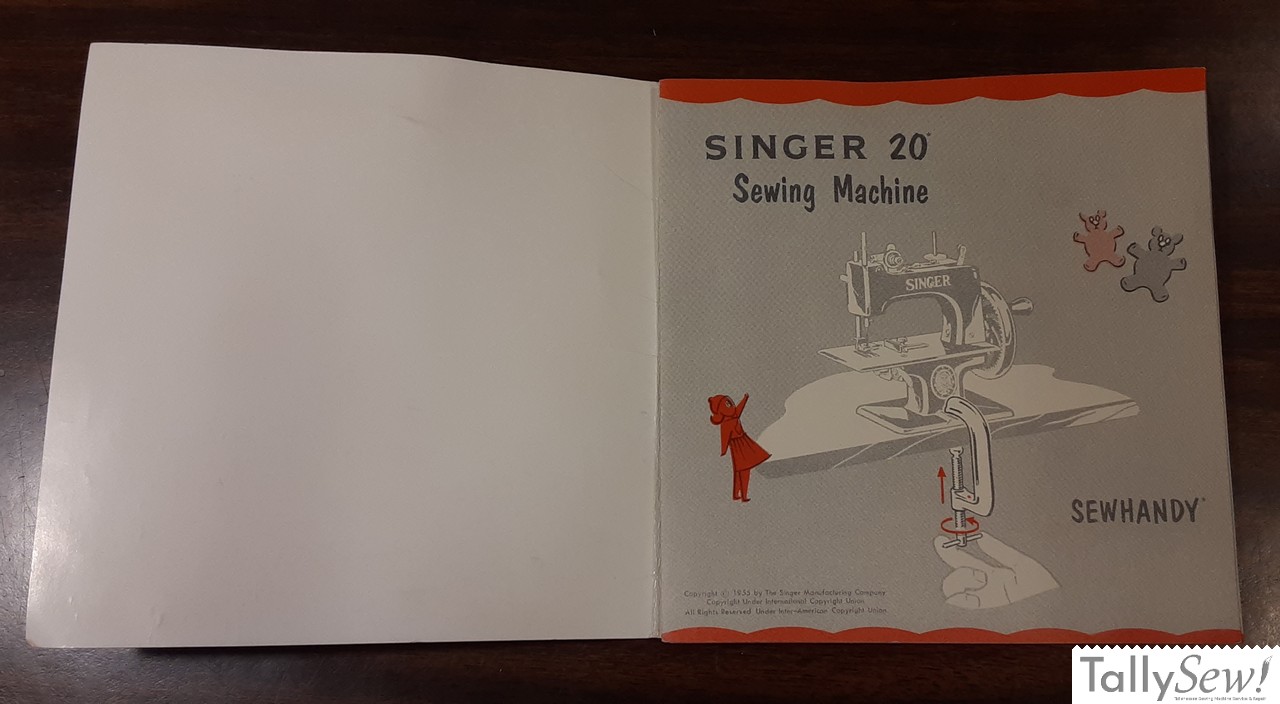
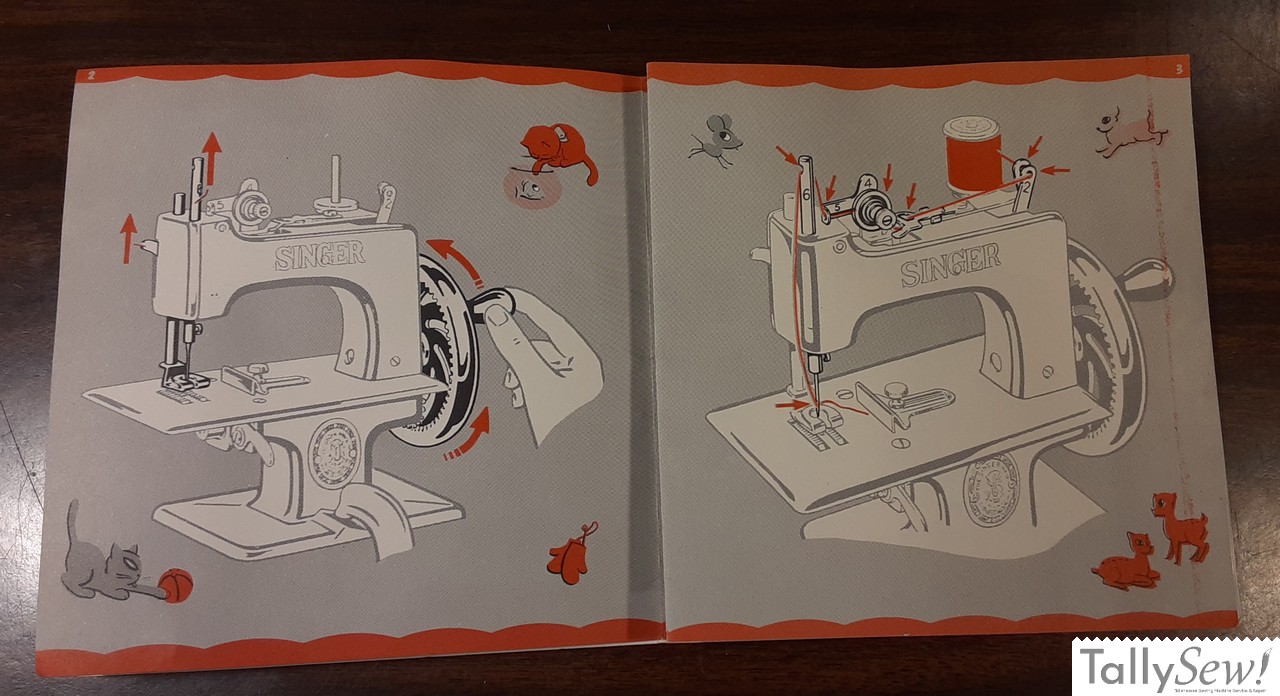
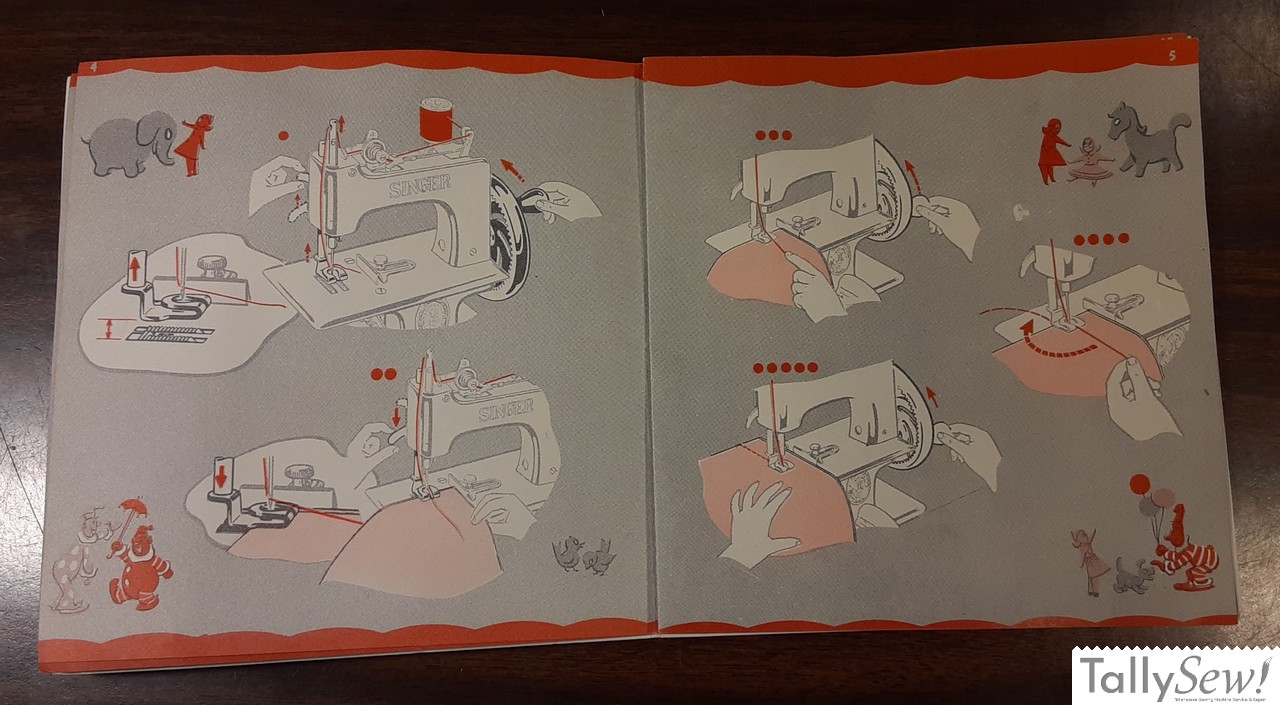
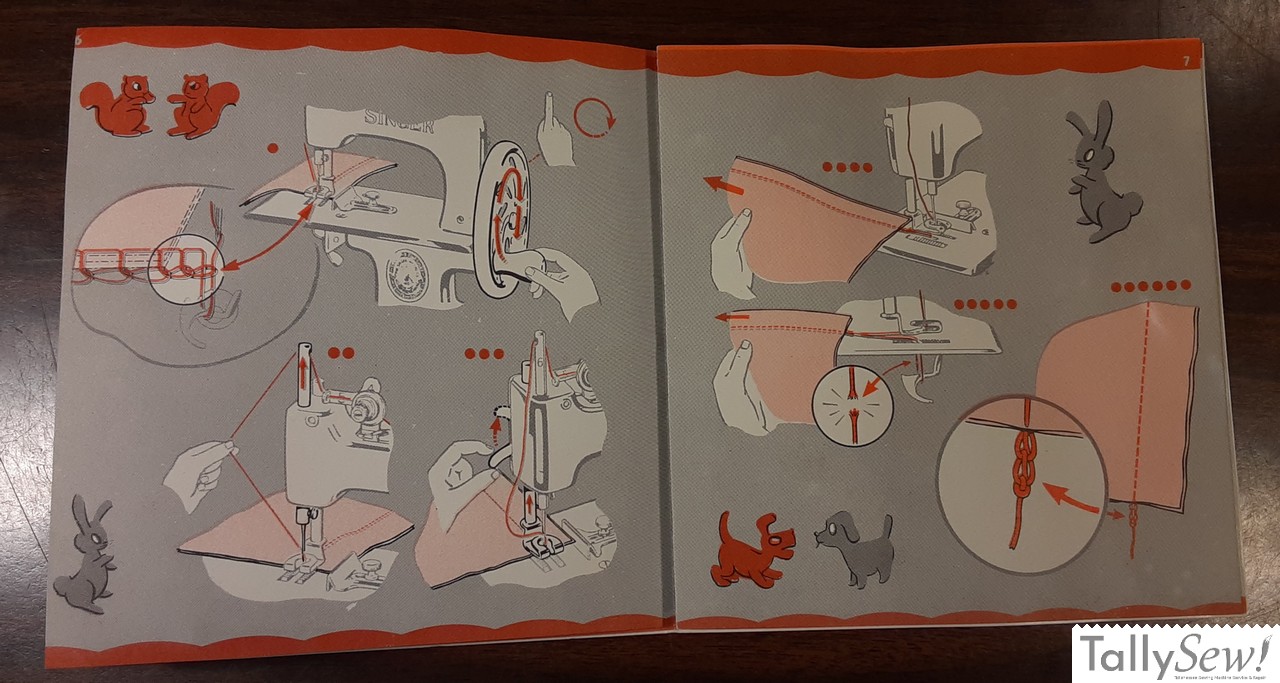
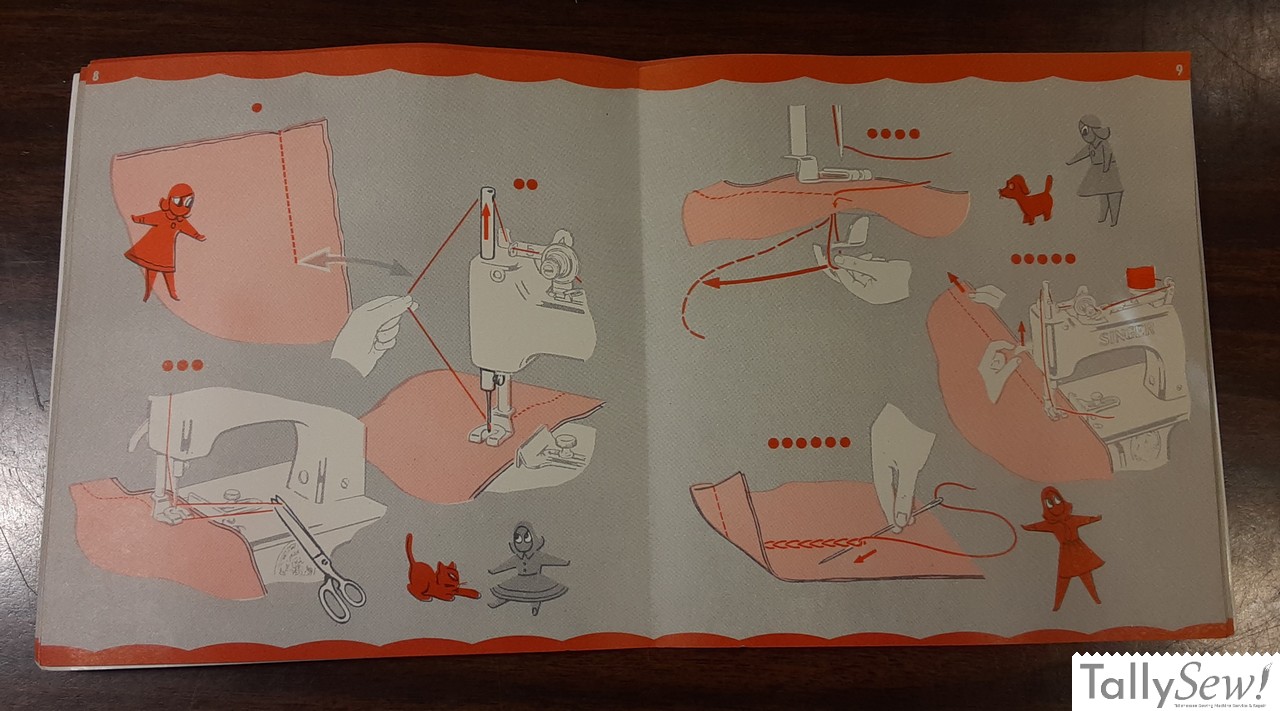
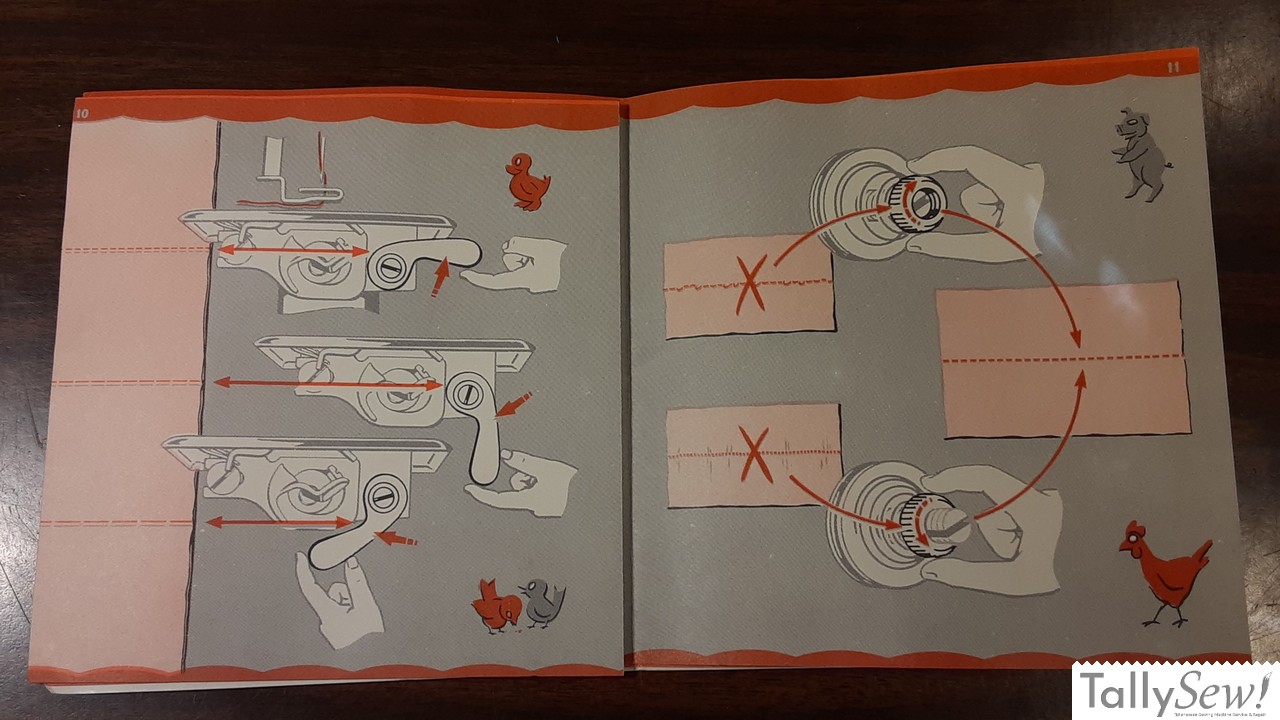
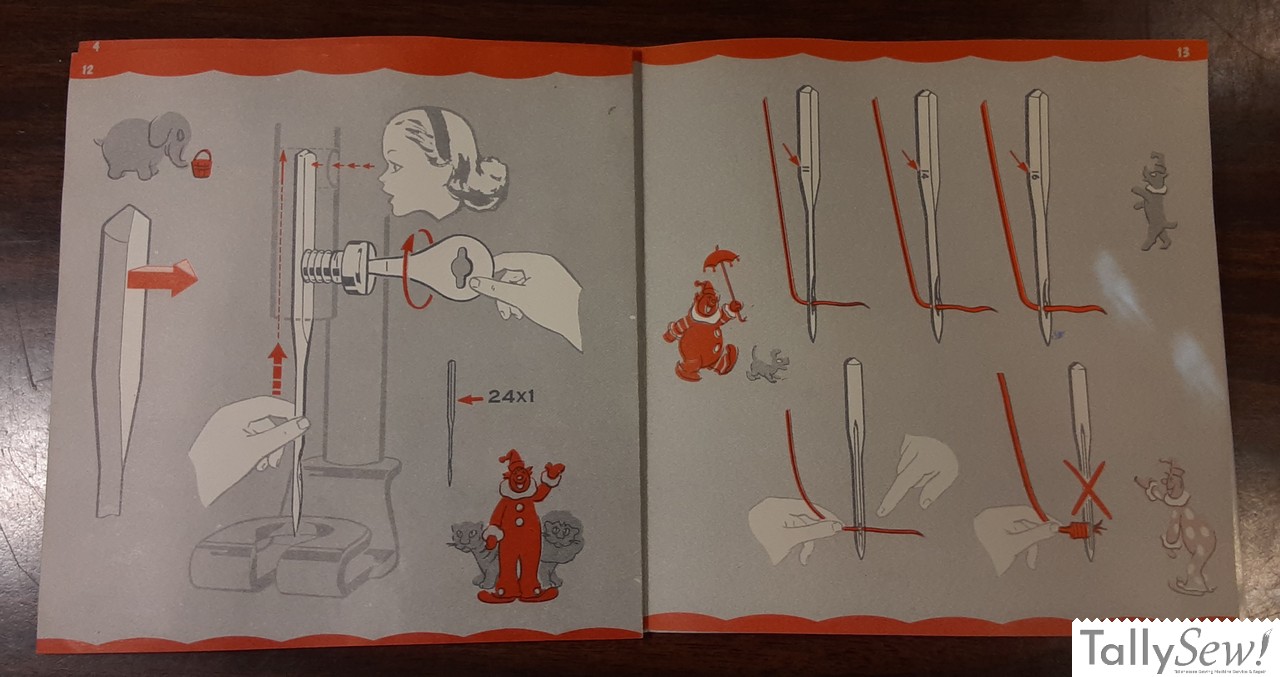
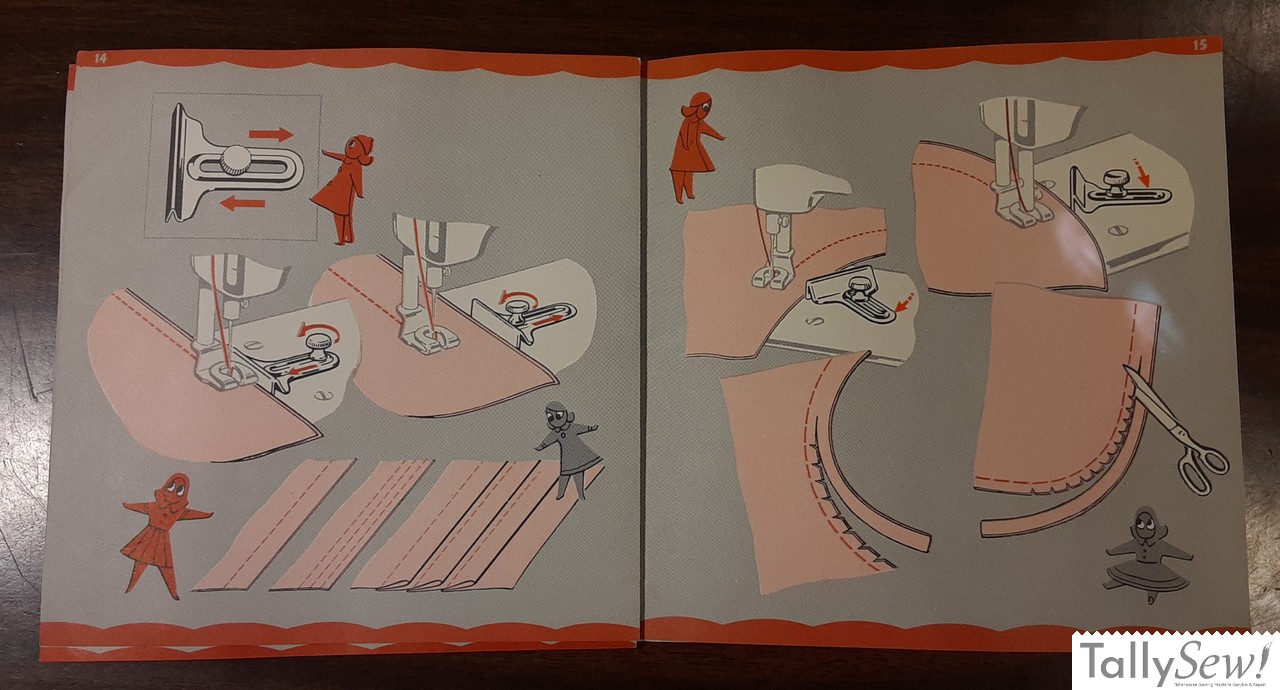
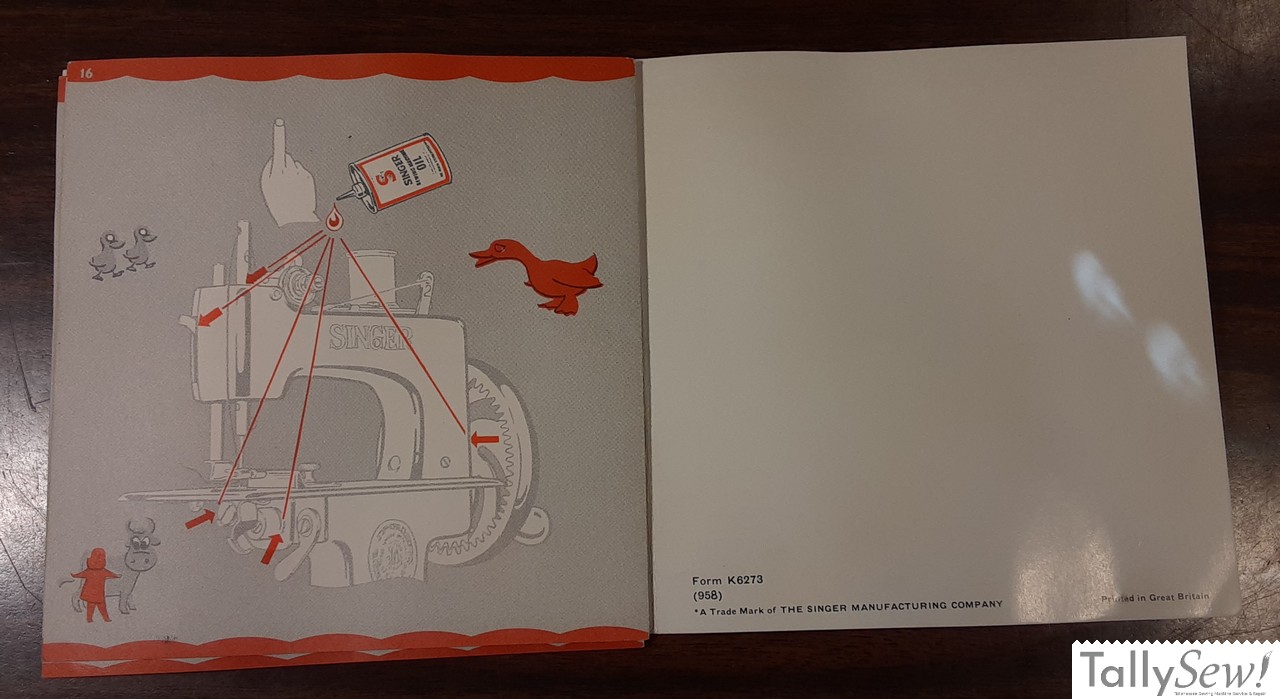
Singer supplied the Sewhandy with a heavily illustrated instruction booklet. The diagrams show threading, needle installation, operation, tension adjustment and basic machine care in a format accessible to younger users.
This Model 20-10 came with a 16-page comic-book-style instruction booklet, but Singer produced several versions of the illustrated instruction booklet, so yours may be different than the one displayed in the gallery above.
- Kid-Friendly Storytelling: Instead of dense technical diagrams, Singer used colorful, story-driven comic panels featuring young characters to teach machine operation.
- Step-by-Step Guidance: Plainly illustrates the thread path, needle installation, tension adjustment, stitch formation, and correct direction of handwheel rotation.
- Educational Value: Teaches proper thread tension management and seam unraveling techniques in an approachable, engaging format.
Tool, Needles and Envelope with the Singer logo
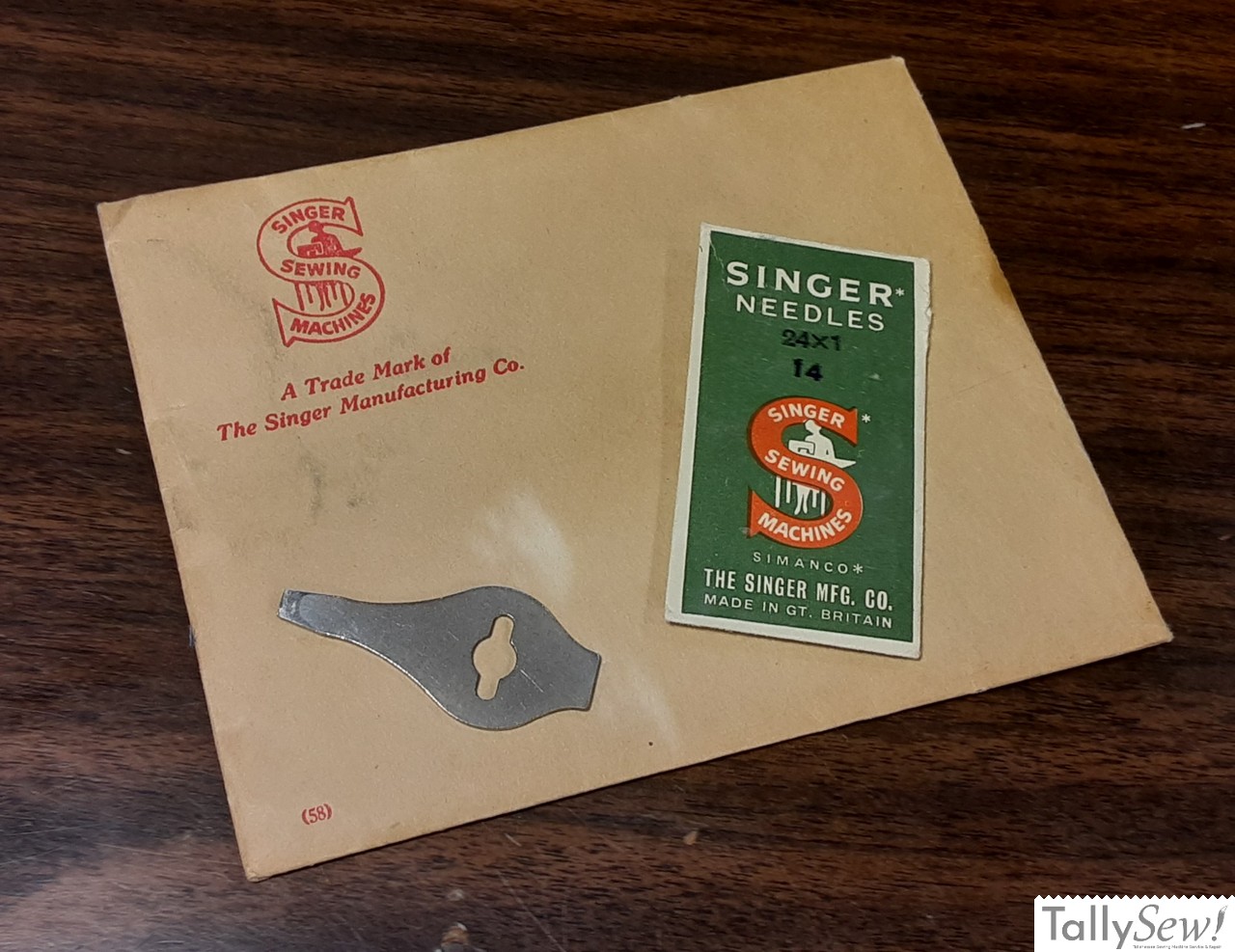
This model 20-10 machine had an original screwdriver and a package of 24×1 machine needles in an envelope stamped with the Singer logo inside the box.
Other sub-models and variants
Beyond the 20-1 and 20-10, Singer manufactured several other sub-models, motorized variants, international versions, and related machines within the Model 20 line. Singer also sold some Sewhandy machines as part of Mannikin sewing sets that included dolls and sewing accessories. Other boxed sets and carrying cases may have been assembled or marketed by dealers or for specific regional markets.
Singer Model 20-2 (Motorized)
Singer also produced motorized Model 20-2 versions. Early 20-2 machines used the cast-iron Model 20 body, while later motorized Sewhandy machines were also designated 20-2.
- Mechanics: Factory-motorized with an electric motor and foot control.
- Early 20-2: Collector dating places the original cast-iron 20-2 in the 1926–1948 Type 3 period, although the actual years of motorized production may have been narrower. Surviving examples use a motor mounted to the rear and a dedicated foot controller.
- Surviving early 20-2 machines are documented with Singer’s small J-1 motor mounted at the rear and controlled by a separate foot controller.
- Later 20-2: Built on the die-cast 20-10 body during the late 1950s, with the motor housed directly in an enlarged rectangular base unit.
Singer K-20 (Turkish Reproduction)
Do not confuse the British 20K designation with the much later Turkish K-20 reproduction. In Singer nomenclature, a suffix K normally identifies Kilbowie production; the Turkish reproduction is commonly identified separately as K-20.
- Production Era: Sources conflict. One collector chronology dates the Turkish K-20 to approximately 1989–1990, while other secondary histories place Turkish Model 20 production as early as the late 1970s. I have not found Singer factory documentation that resolves the discrepancy.
- Origin: Singer reproduction manufactured in Turkey. A modern reproduction of the earlier Model 20.
- Identification: Similar mechanics to the early cast-iron machines, but identifiable by a “Made in Turkey” decal on the rear, possible bright chrome-like plating instead of nickel, and a small bentwood carrying case with a riveted red “S” badge.
International Factory Variants
The Model 20 and Sewhandy were produced in several Singer factories and sold in different regional versions, including U.S., Canadian, British, and French examples.
- Singer Model 20K (Kilbowie, Scotland): Identified by the “K” suffix in the model designation. Early cast-iron 20Ks are identical in operation to U.S. models, but post-war 20-10 variants featured unique UK packaging and manual variations.
- International and Export Variants: Manufactured at Singer’s French facilities. French-market machines survive in several unusual brown, green and metallic-toned finishes. Modern names used for these colors by collectors and dealers should not automatically be assumed to be Singer’s original terminology.
End of the Singer Model 20 Sewhandy Line
- By the early 1960s the Model 20 era was ending, while Singer continued the children’s Sewhandy line with newer machines including the electric 50D and British-made 40K.
Would you like to know more?
- Singer Sewing Machine Company History
- Wikipedia – Singer Corporation
- Facebook Group – Vintage Sewing Machines
- Singer Class 20 Sewing Machine Information
- Singer Miniature Toy Sewing Machines 20, 24, 30K, Sewhandy
- Sewing Machines: Historical Trade Literature in Smithsonian Institution Collections
- Singer Sewing Machines – Model 20
- Singer Toy Sewing Machine – Singer model 20 sewing machine – Singer Sewhandy
- Kid Stuff – Singer Toy Sewing Machines
- Singer Sewing Machine Motors, Foot Controllers and Drive Belts