
Free-Westinghouse Type E Rotary – Free Sewing Machine Co. – Specs, History & Parts Guide
updated: 2026.04.10
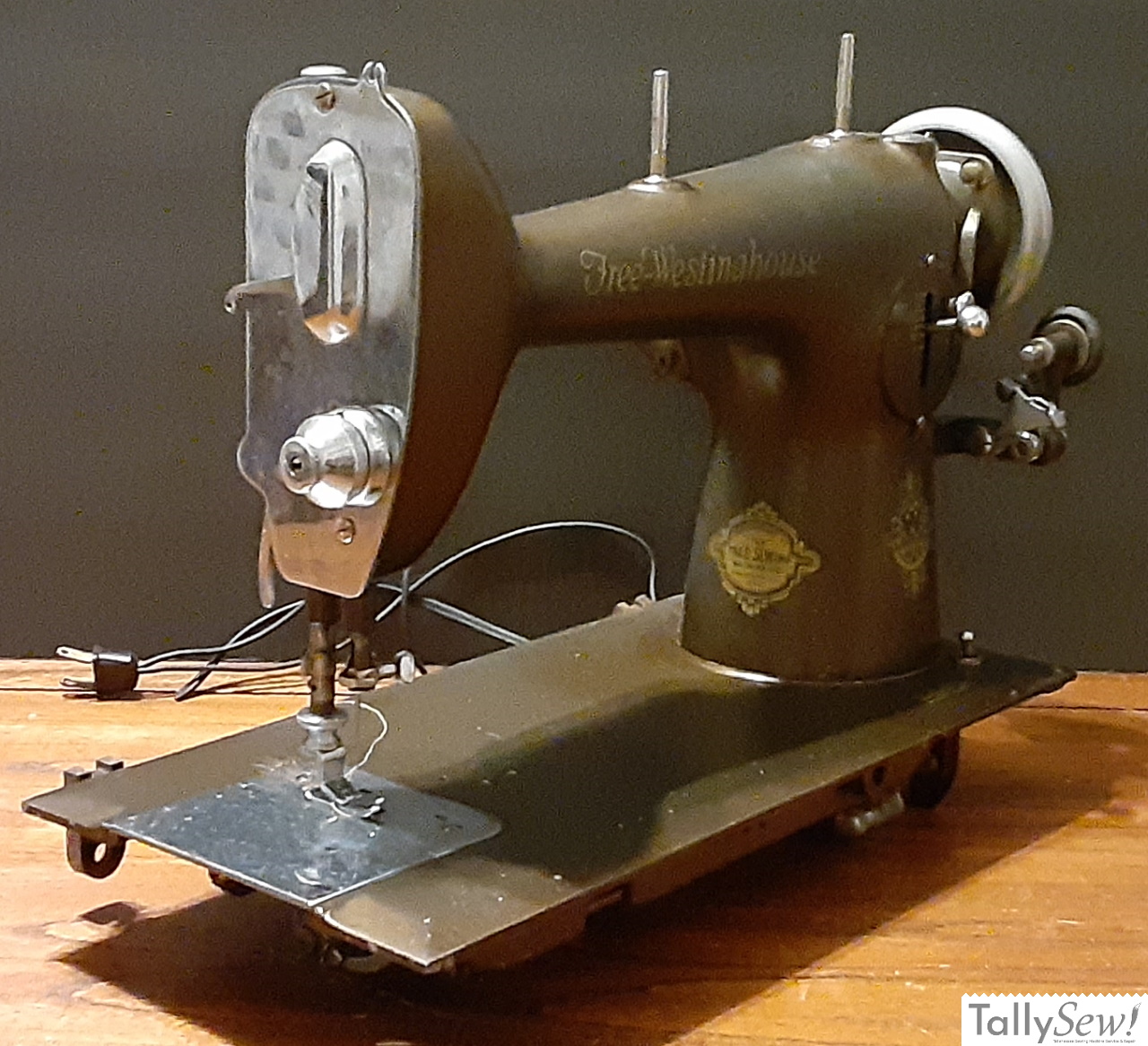
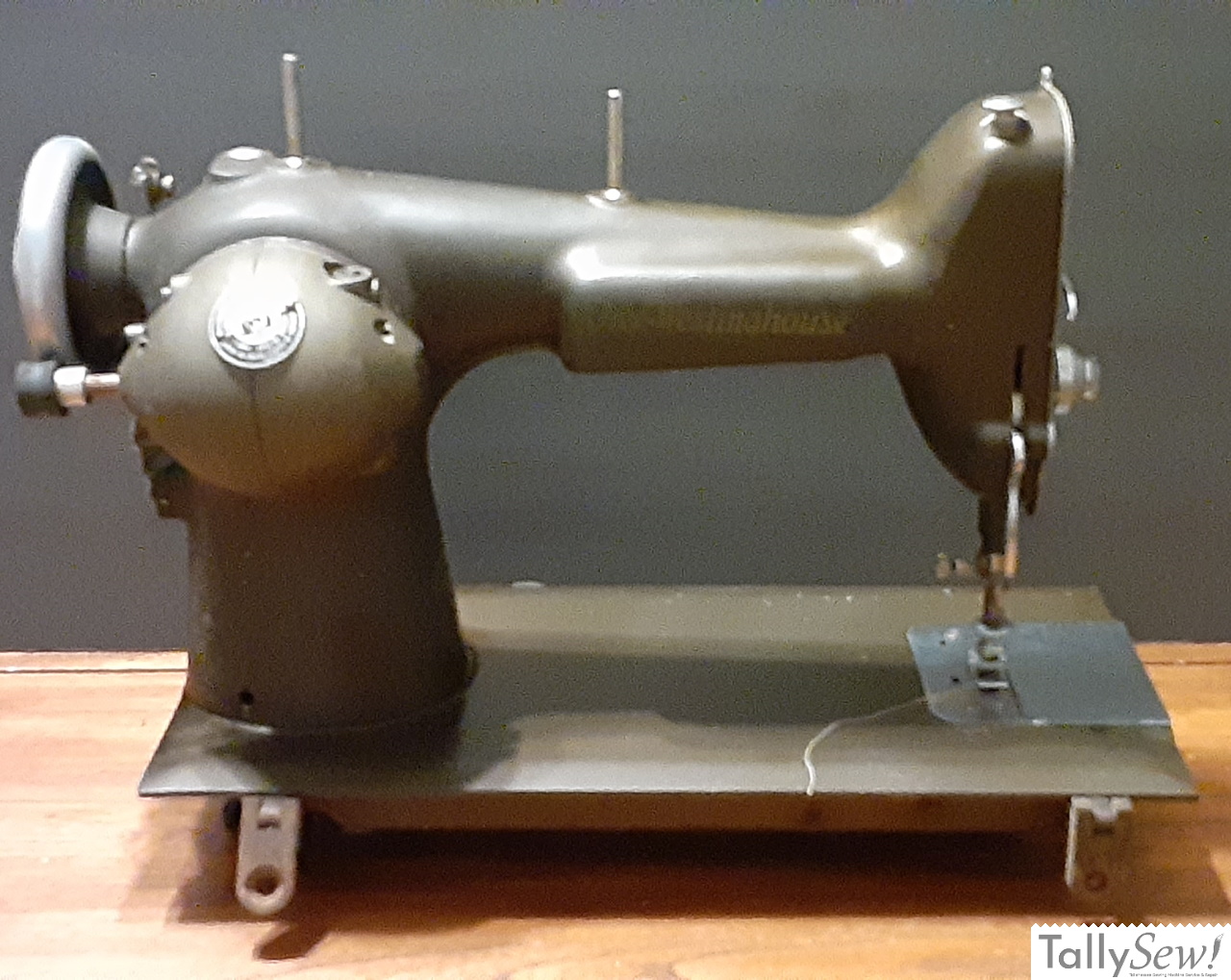
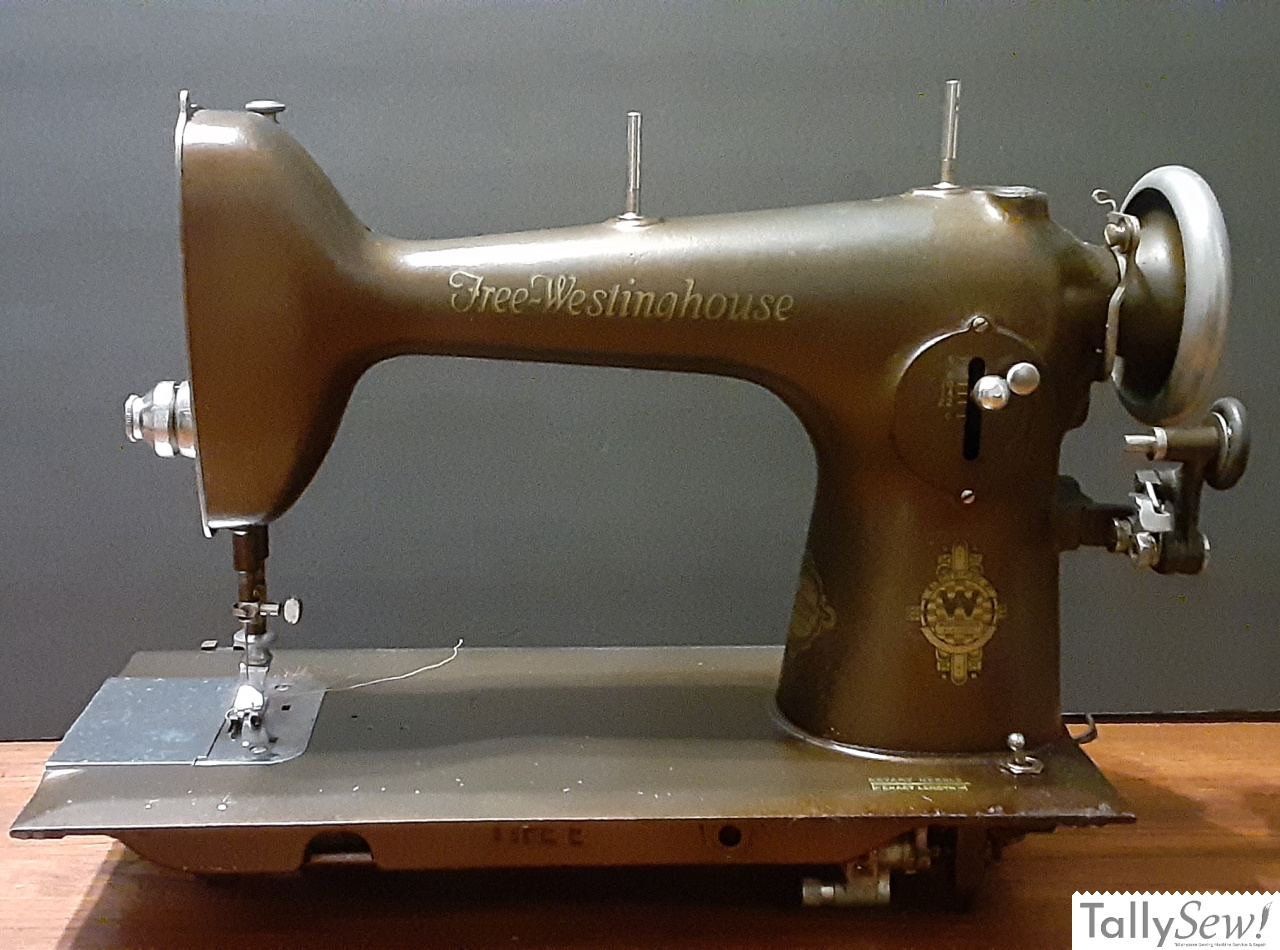
At the time of this writing, I have three of these machines made by the Free Sewing Machine Company. This one is badged “Free–Westinghouse Type E Rotary,” while the other two are marked “New Home Type F Rotary.” All three are fitted with Westinghouse-built motors, though they’re very different in appearance.
All three machines are straight-stitch-only, full rotary hook with no zig-zag capability. Instead of the back-and-forth motion of earlier vibrating shuttle designs, the hook spins in a continuous circle. By this point, that was Free’s premium domestic setup. In use, it’s noticeably smoother, quieter, and happier at higher speeds, with more consistent stitch formation to match.
One of the first things that stands out is the cast magnesium body. It looks substantial, but it’s lighter than cast iron, which made these machines easier to move around than you’d expect. That mattered at a time when machines were still being shifted between rooms or tucked into cabinets. Internally, the drivetrain is mostly metal. Some examples are reported to use a plastic gear on the vertical shaft that drives the rotary hook. I haven’t confirmed that firsthand yet, but it’s worth checking for cracks if you’re going through one.
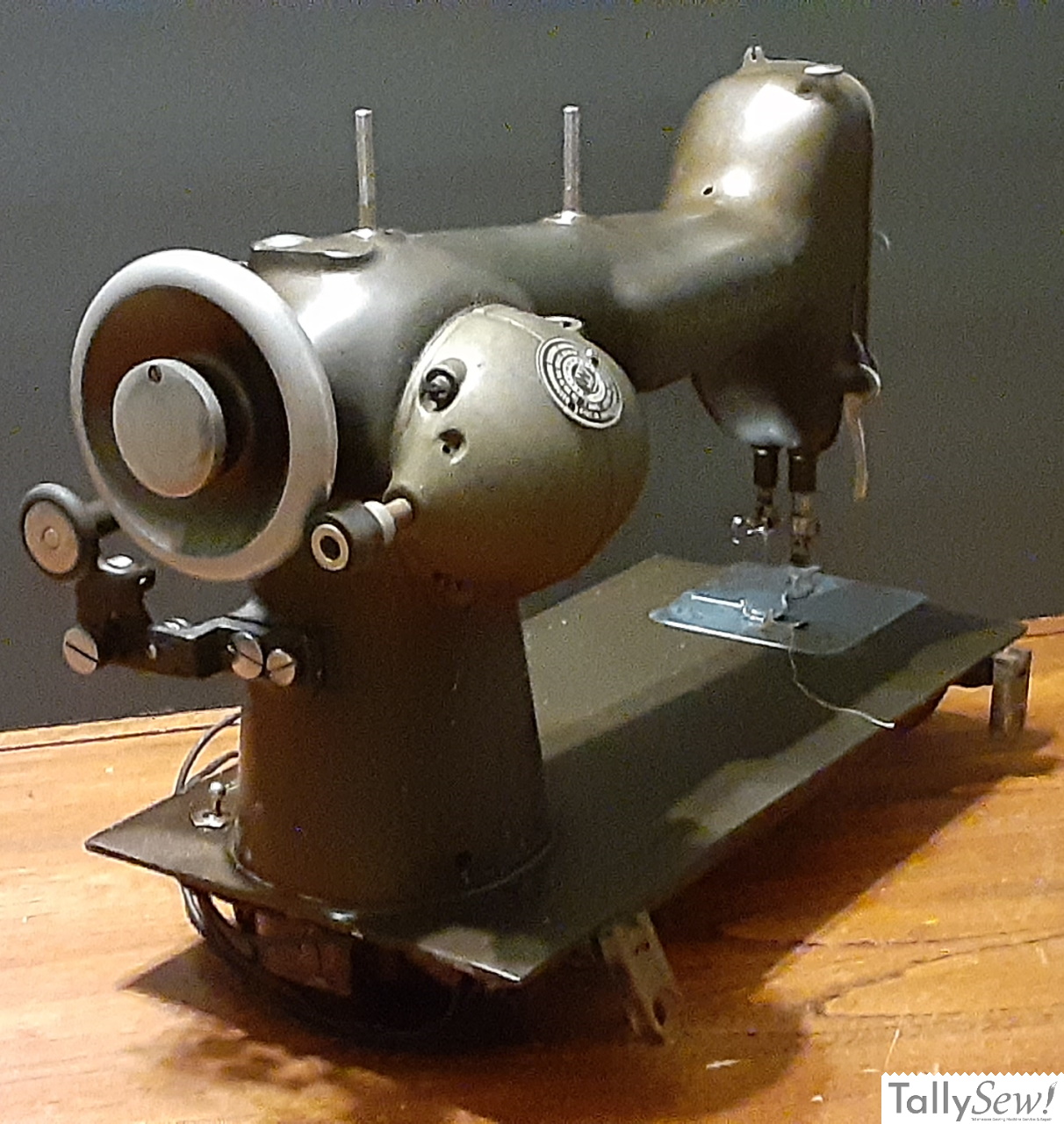
The most visually distinctive feature, though, is the Westinghouse “turtle shell” motor. Instead of a belt, it uses a friction drive—a rubber wheel presses directly against the handwheel and turns it clockwise. As that rubber wears, the motor can be rotated slightly on its mount to keep proper contact. It’s a clever, very self-contained design, and it stands in sharp contrast to the motor setup on the Type F, even though both were built by Westinghouse.
Turtle shell motor
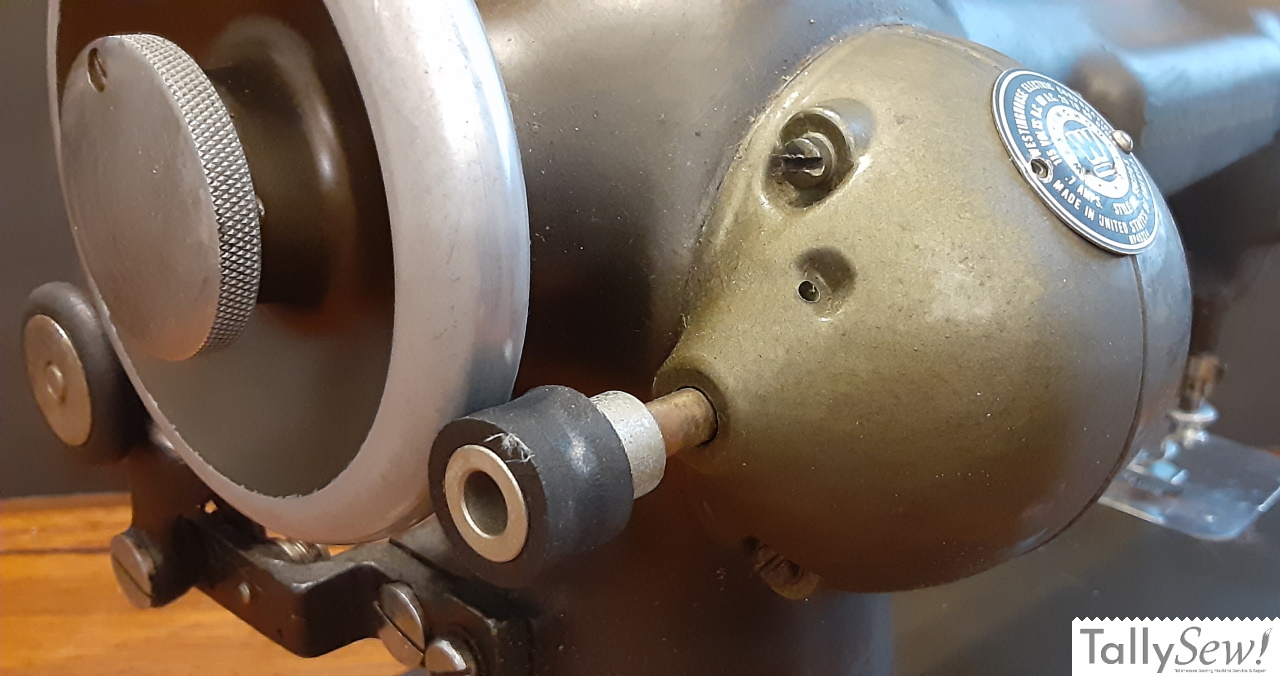
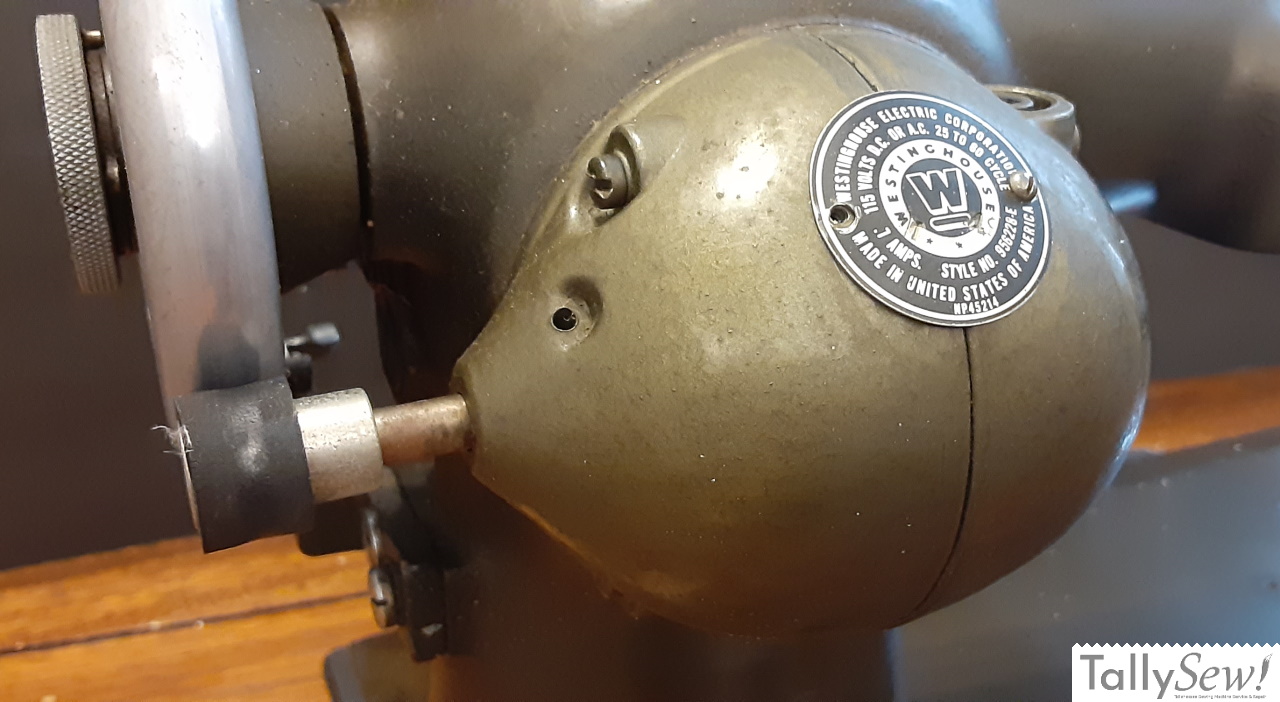
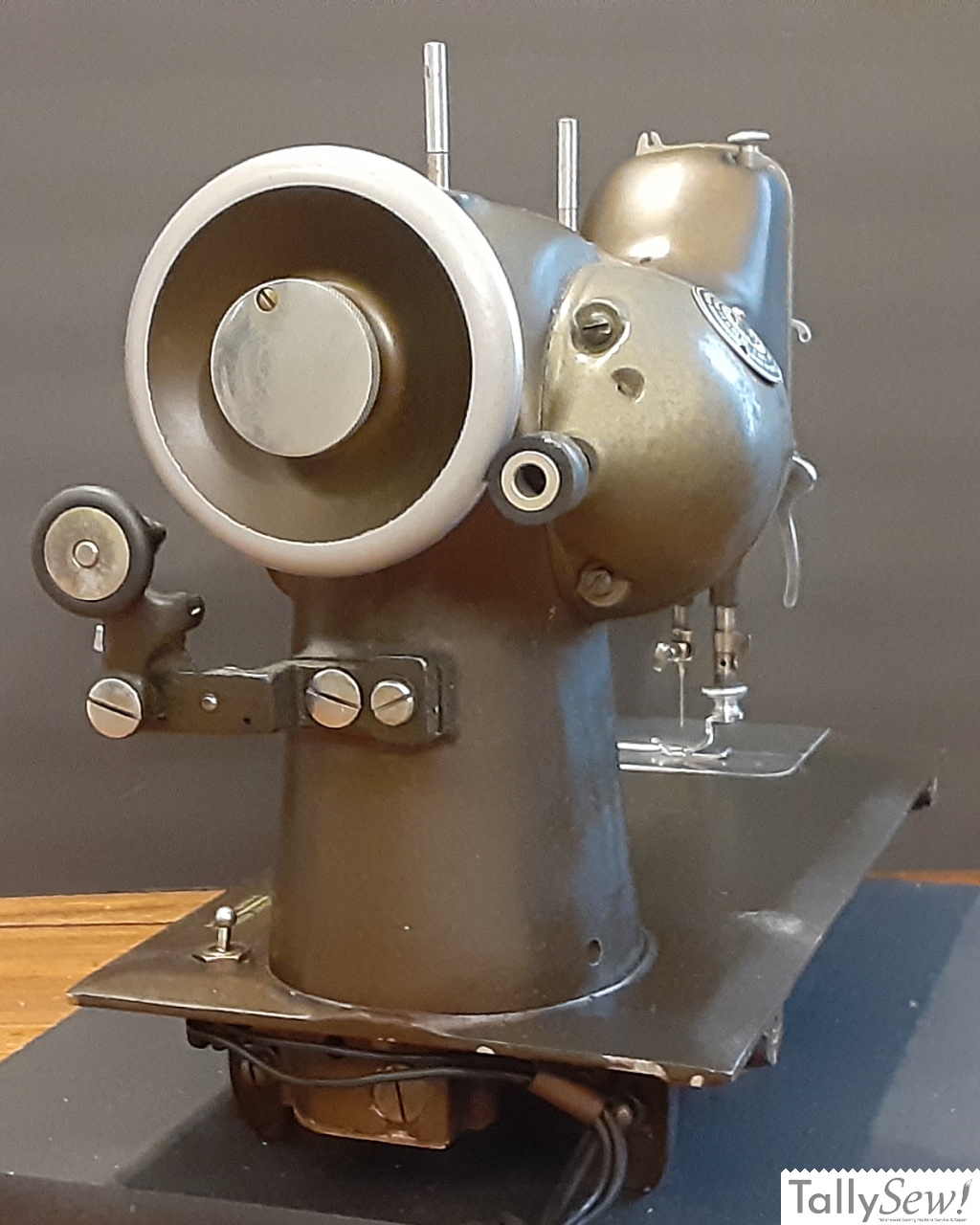
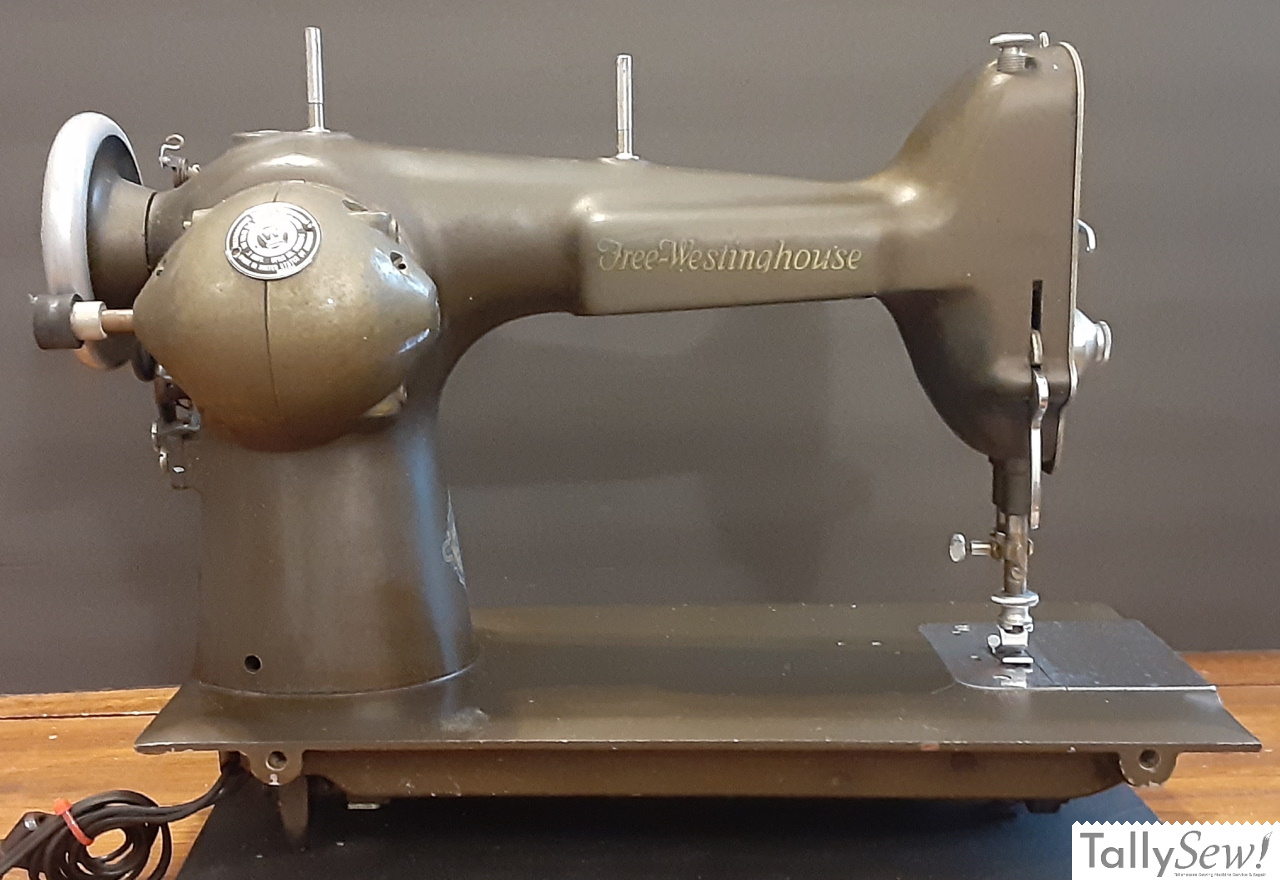
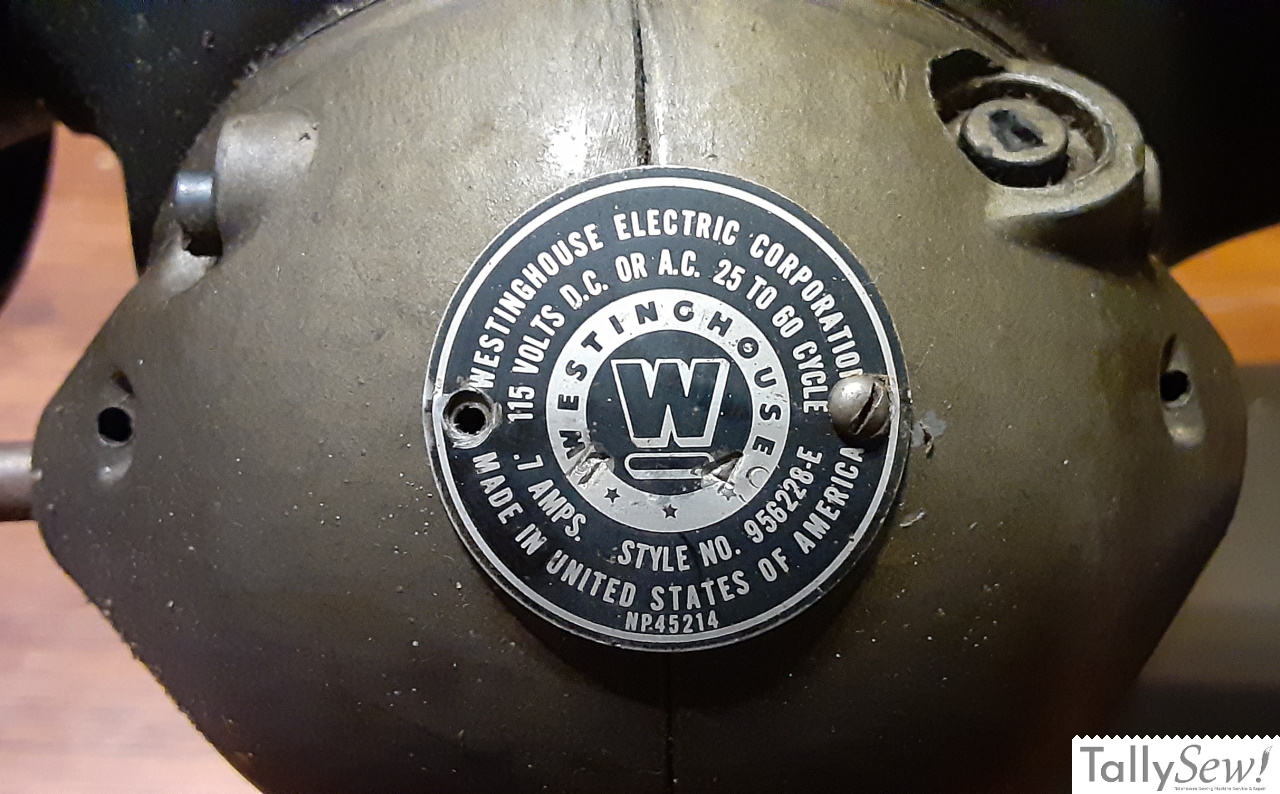
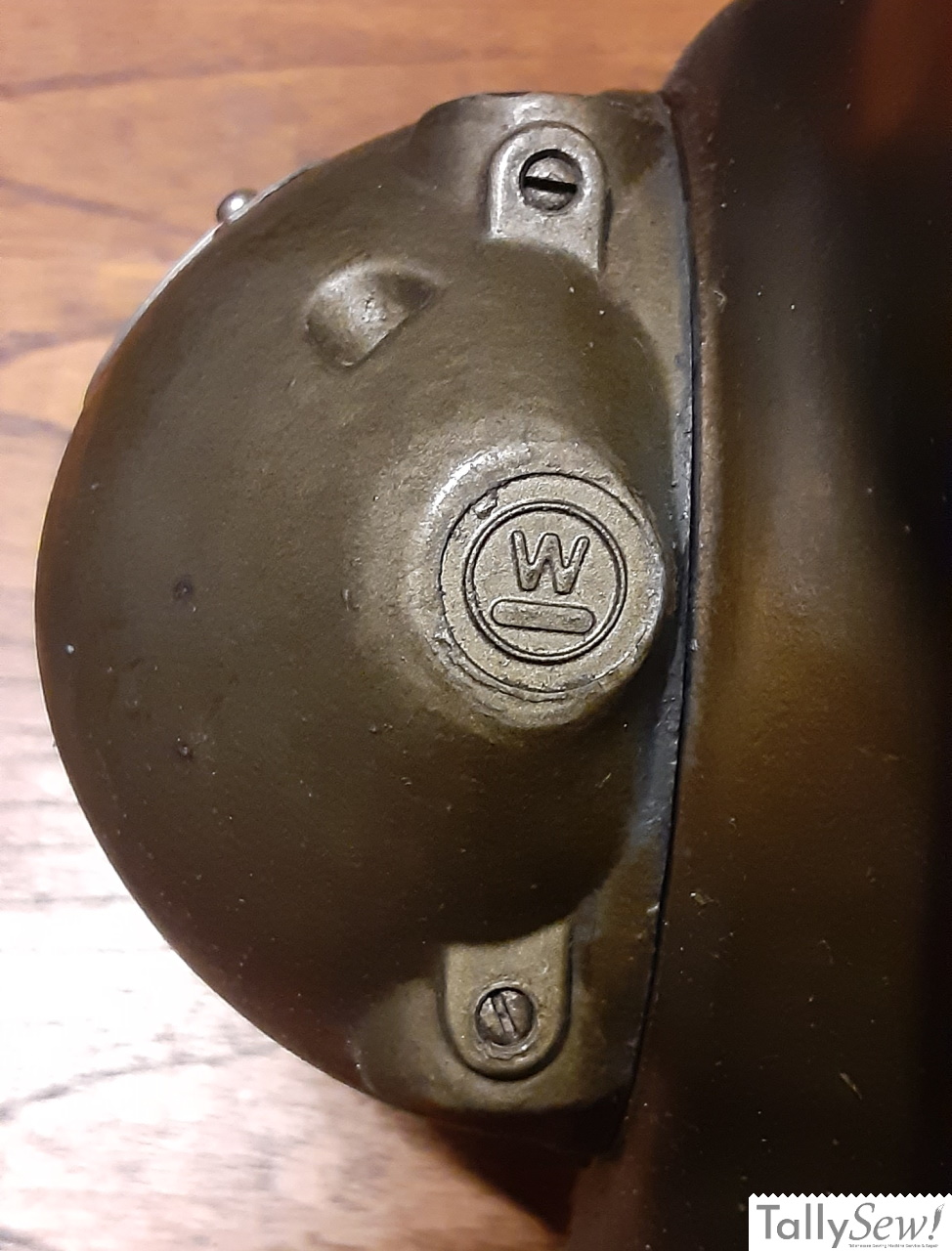
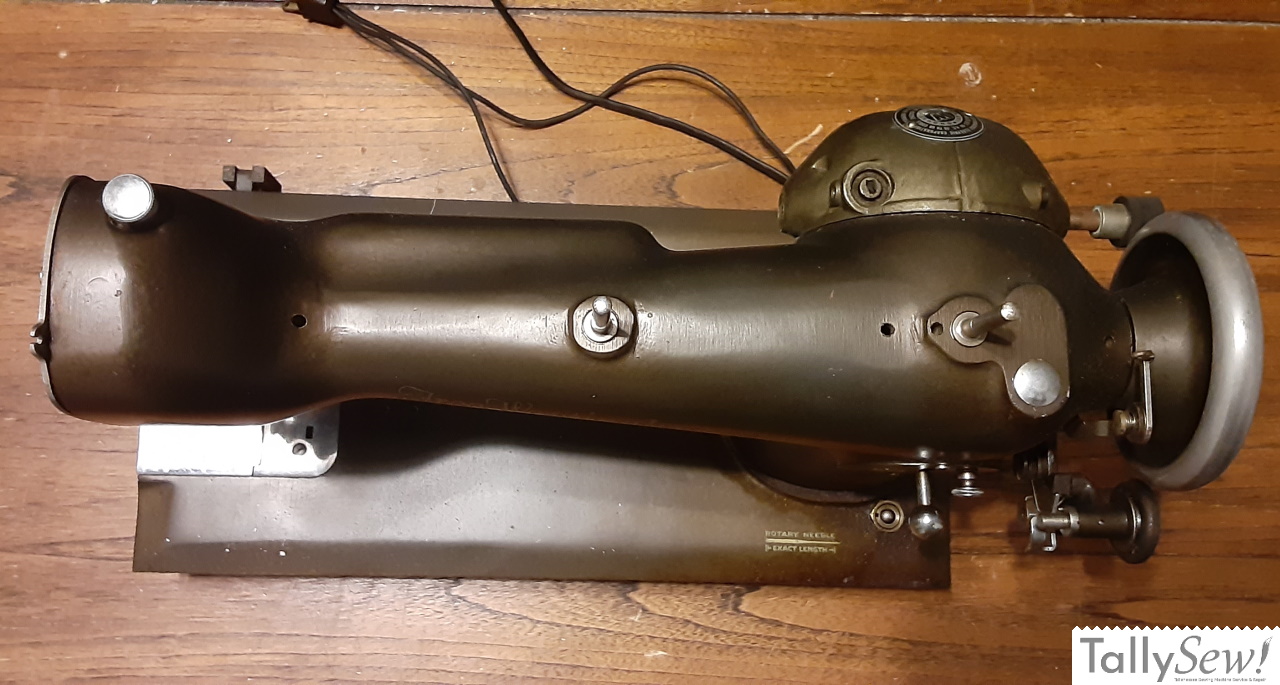
The Free–Westinghouse Type E Rotary above features the distinctive Westinghouse “turtle shell” motor. This is a friction-drive setup, not a belt, using a rubber wheel that presses directly against the balance wheel and spins it clockwise. As that rubber wears, the motor can be rotated slightly on its mount to maintain proper contact, a simple but effective bit of design for its time. It’s also immediately recognizable, and looks quite different from the motor used on the New Home Type F, even though both were built by Westinghouse.
Badging and other decals
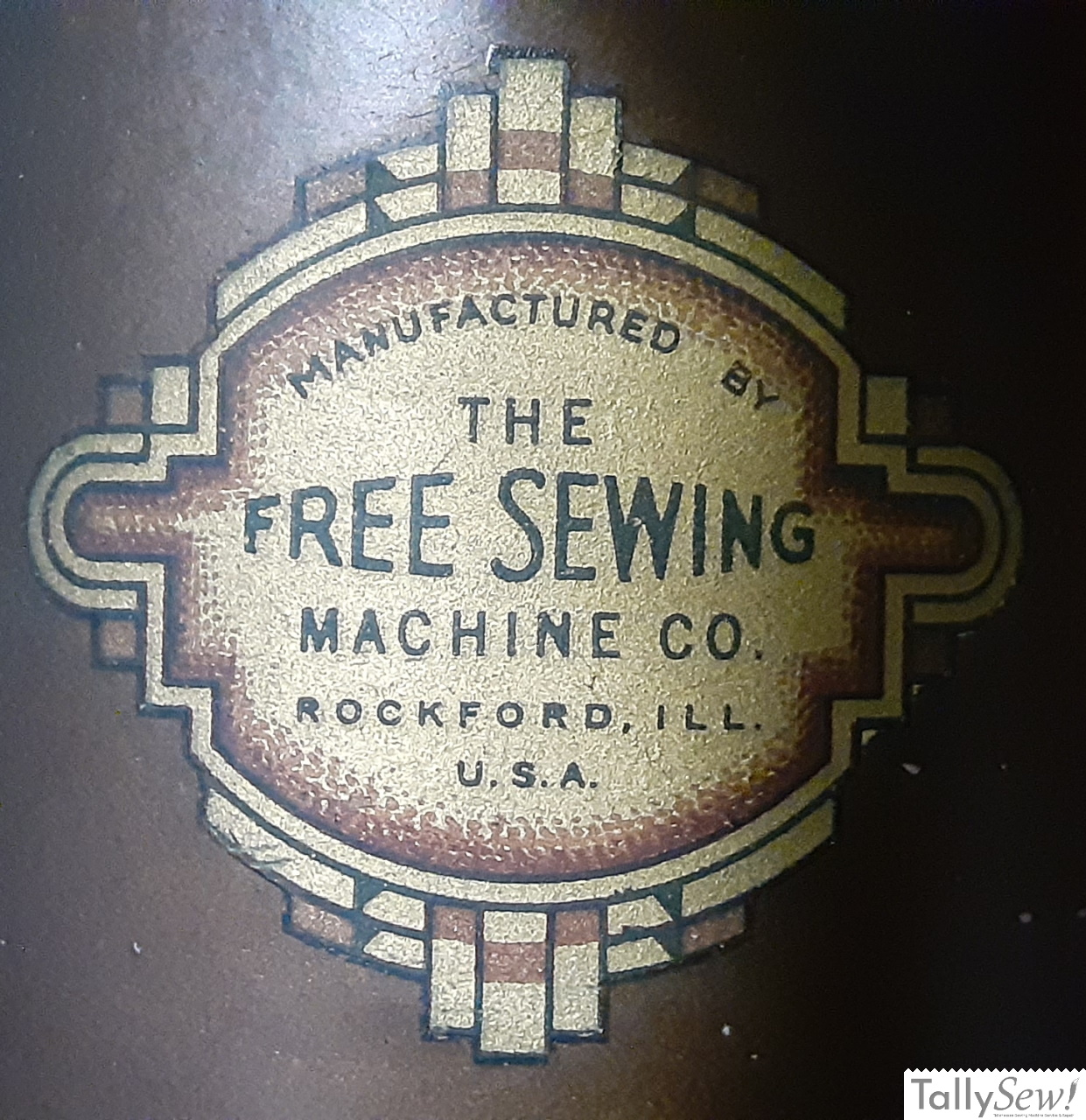
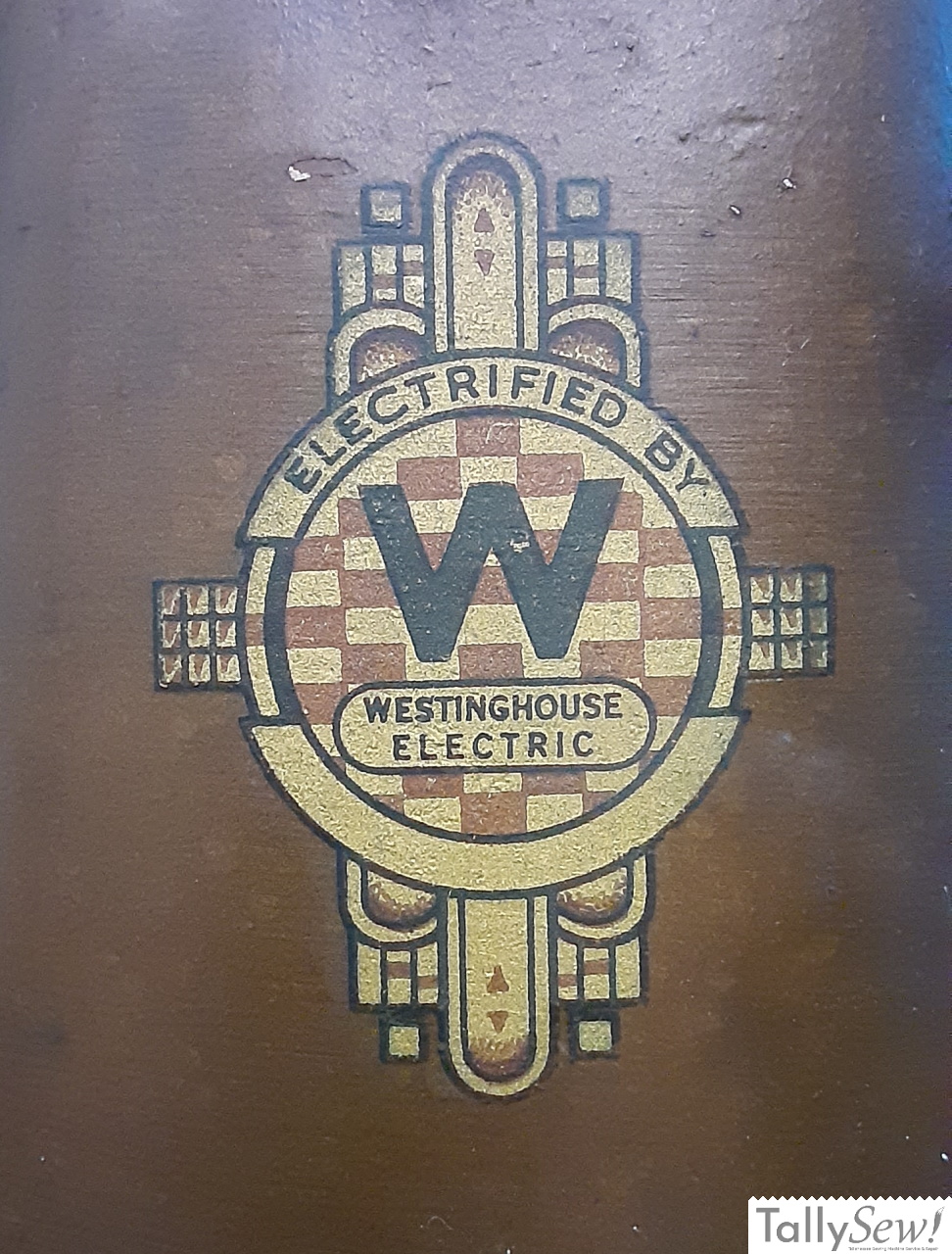

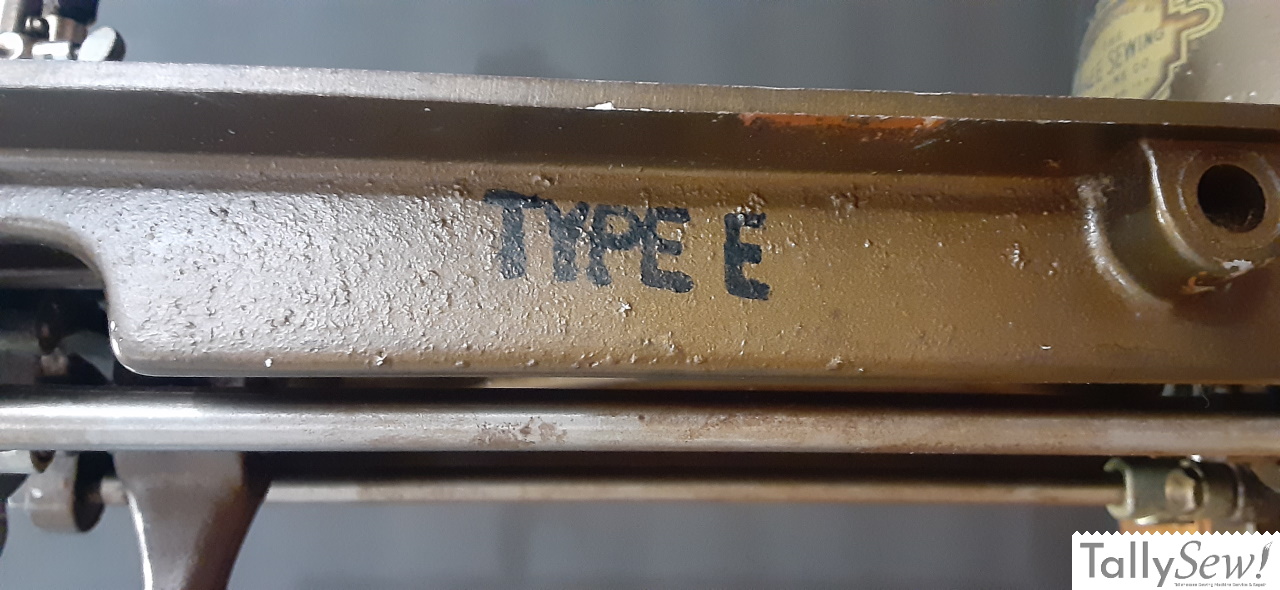
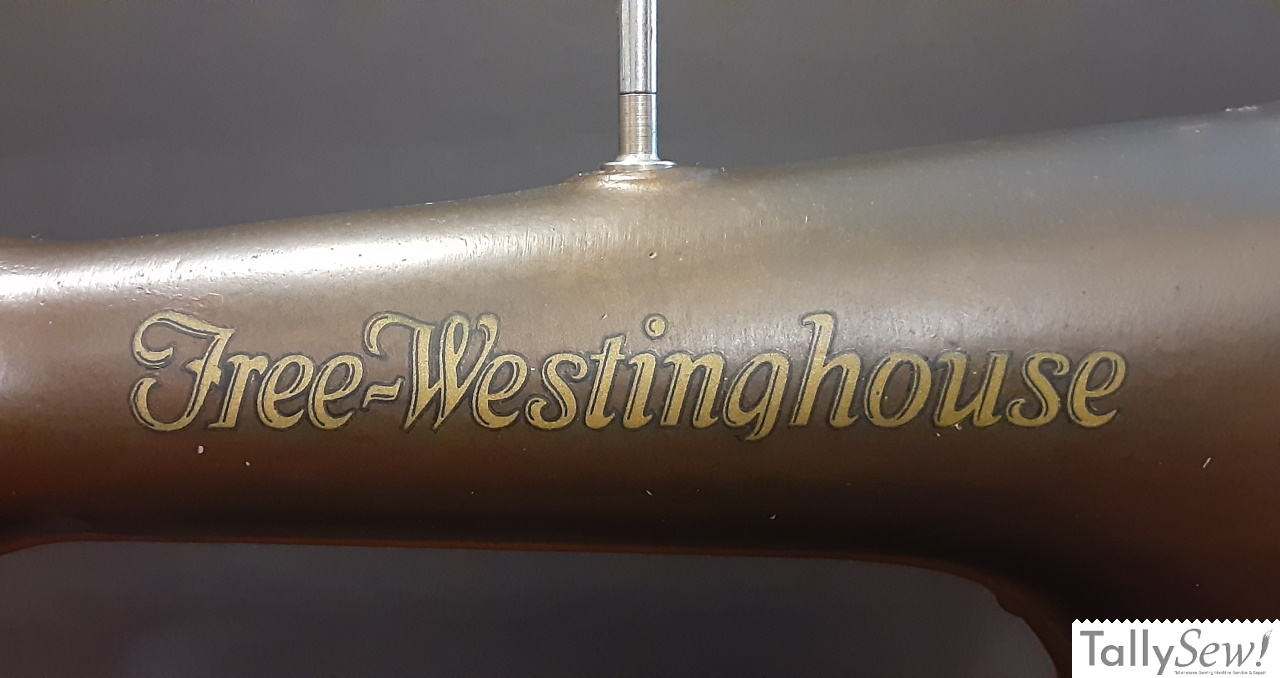
These machine came with great decals, and the model number was stamped just under the deck on the front rib.
Relationship to the New Home Type F Rotary
The Type E and the New Home Type F are closely related, in many cases the same machine under different badges. Both were built at the same Rockford factory by the Free Sewing Machine Company during roughly the same production window. The primary differences come down to motor style and cosmetics:
- The Type E has the distinctive turtle shell friction-drive Westinghouse motor.
- The Type F typically has a more traditional Westinghouse motor design, different in appearance even though both are Westinghouse-built.
- Both use the same bobbin system (likely interchangeable), the same needle system, and the same top-clamp presser foot.
- Construction material varies across both models, cast magnesium is most common, but cast iron examples exist for the Type F.
This overlap is Free’s badge-engineering model in action. If you have both a Type E and a Type F, they can share some parts. Bobbins, bobbin cases, and presser feet are all cross-compatible.
Machine needle
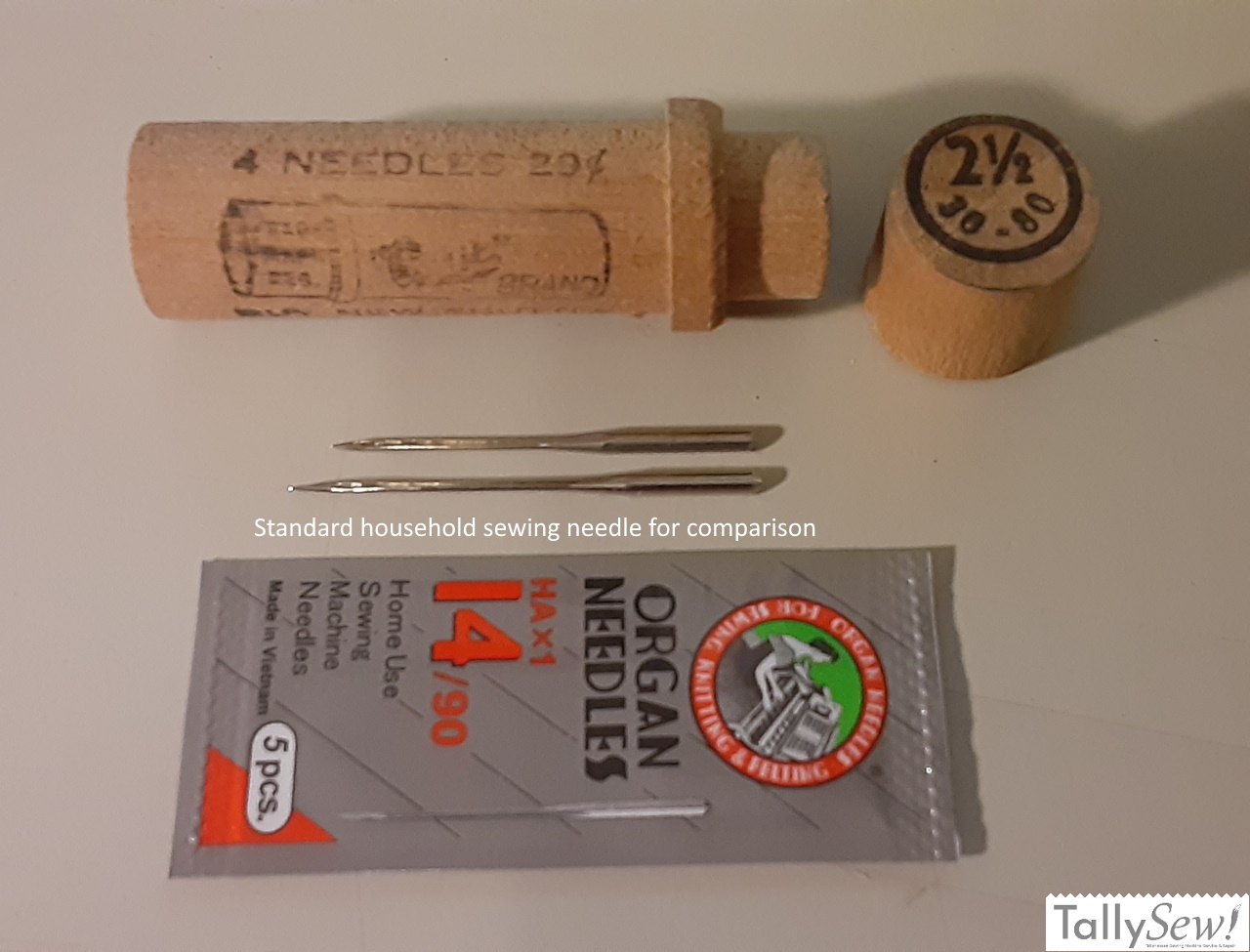
According to the manual this machine uses a CC1221 Rotary Needle, and as shown in the image above my machine included a few Boye Sewing Machine Needles sized 2 1/2 30-80. These are a hair shorter than the common 15×1 needles used in most modern household machines. I haven’t tried it yet, but it’s my understanding that you can adjust your needle bar up a little, allowing you to use a 15×1 needle in this machine (do this at your own risk).
Bobbin case and bobbin
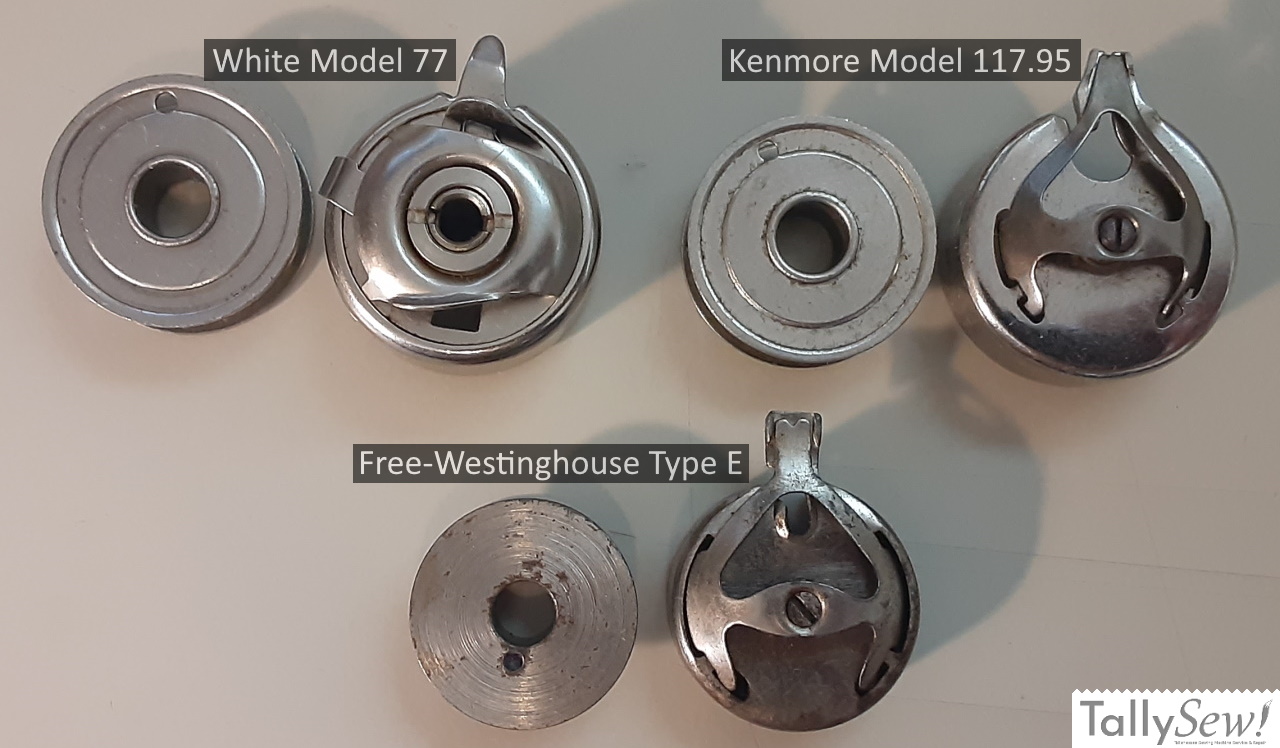
The bobbin case for the New Home Type F and Free~Westinghouse Type E Rotary looks like the wishbone rotary bobbin cases used in the older style White sewing machines, but these are smaller. This bobbin case and bobbin is closer to the Kenmore 120 series rotary machines manufactured by New Process. In fact I’m pretty sure, though not positive, that the Type F bobbin case and bobbin and the ones used Kenmore 120 series rotary are interchangeable. For a deeper dive into Rotary bobbins and bobbin cases, check out “A few rotary bobbins and bobbin cases“.
Historical Context of the Free-Westinghouse partnership
The Type E sits right in the transition from foot-powered treadles to household electric sewing. The Free-Westinghouse partnership was in part a commercial bet that electrification of the home would drive demand for electric sewing machines, a bet that paid off. The turtle shell friction-drive motor is a physical artifact of that transition period, when motor designs for domestic appliances hadn’t yet standardized.
Free was never a prestige brand in the way Singer was. Their business model was built around badge engineering and volume, building one solid rotary and selling it through Sears, Montgomery Ward, and department stores under whatever name the retailer wanted. The Type E is a good example of how that worked: the same machine head reached the market as Free-Westinghouse, New Home, and potentially several other names. That’s why these machines are harder to document than Singer models, and why collector resources are patchier.
What they sacrificed in brand identity they made up for in mechanical quality. Free’s rotaries earned a consistent reputation among technicians and collectors for smooth, tight-tolerance operation, what the marketing of the era called “frictionless” running. When a Type E feels heavy or sluggish, it’s almost always because it needs cleaning and fresh oil, not because something is worn out.
Specifications
| Brand | Free-Westinghouse |
| Model | Type E Rotary |
| Manufactured By | Free Sewing Machine Company |
| Made In | Rockford, Illinois, U.S.A. |
| Hook Type | Rotary |
| Bobbin | #10025 Note: I’m not 100% sure on this |
| Bobbin Case | #3368 Note: I’m not 100% sure on this |
| Needle System | CC1221 and BB1221 Rotary Needle Boye Sewing Machine Needle 2 1/2 30-80 |
| Foot Type | Top clamp |
| Construction | Cast Magnesium |
| Construction Drivetrain | Metal, with possible plastic hook drive gear |